Future of work · Remote work · Africa
The Future of Work is global, remote, and African
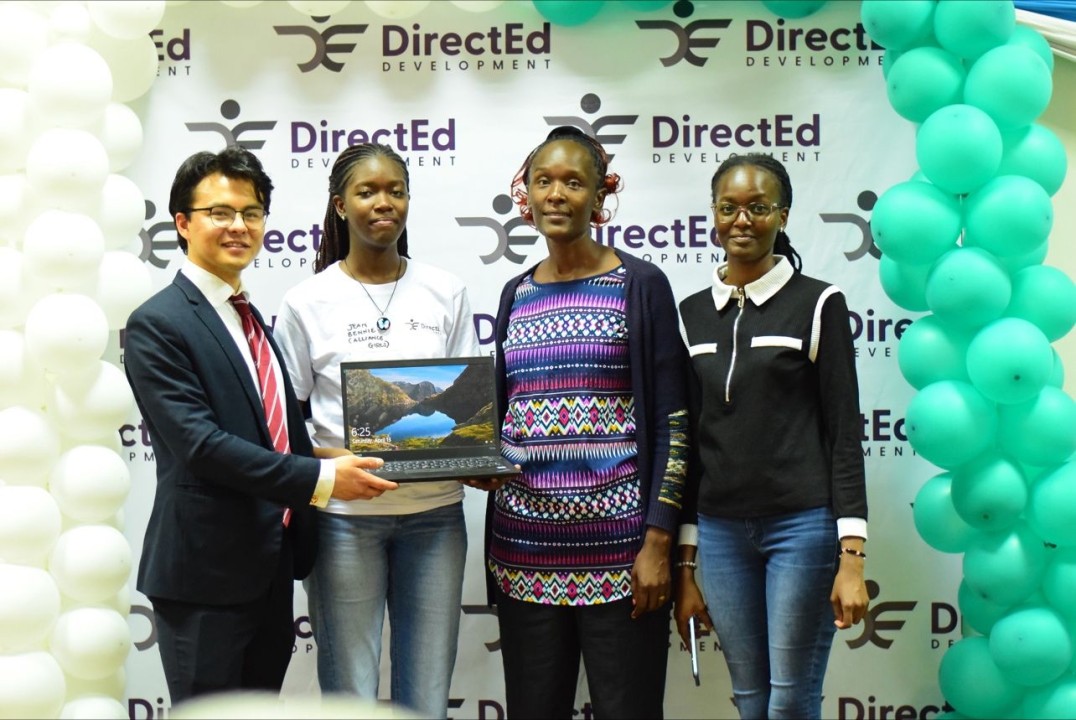
Delivered remotely to DirectEd’s 2024 Launch Day on April 13th, 2024
First of all, I would like to wish a huge congratulations to all 98 of you who are starting DirectEd Development's bootcamp in Kenya and Ethiopia, respectively. Your life is about to change, and I’m honored to be here to celebrate you and hopefully offer some words of wisdom.
My name is Dr. Rasmus Andersen, and I am a strategic advisor on tech and digital innovation and an angel investor. In the past ten years, I have worked in Senegal, Kenya, Ethiopia and across East and West Africa, the UK and the US for African governments, for large investors, for charitable foundations like the Gates Foundation, and for international organizations like the World Bank. I now work with the former Prime Minister of the UK, Tony Blair, to support Presidents and Prime Ministers around the world to make their economies and governments go digital.
But I’m here today to talk to you about the future of work, and specifically what I call “global remote work” or “global digital jobs.” I’m going to tell you what I mean by that, how the world is changing towards this type of work, and why this is such a powerful opportunity for you.
Then, I am going to walk you through the three ingredients that have made this new world of global remote work possible: #1 our super-connected world, #2 the new way of working remotely after Covid-19, and #3 that people in the world’s richest countries are not having enough babies.
Global remote work
There’s a lot of talk about the future of work and what our working lives and careers will look like. We are all playing around with OpenAI’s ChatGPT and maybe Anthropic’s Claude large language models, marvelling at what is now possible. And more autonomous AI agents that can take action in the world will further supercharge Generative AI products. But there will always be “humans in the loop”, and those humans are likely to be the people who know these technologies best.
Actually, the conversation on the future of work is missing a crucial component: I believe that you all are the future of work – that an equally big shift in the world of work will be the ability of talented people anywhere to access a global labor market from wherever you are and getting paid first-class compensation for first-rate work, without having to go through impossible visa procedures. In that way, you are spearheading and pioneering what work will increasingly look like across the globe in the next 5, 10 and 20 years.
You are also the new face of Africa to the world; people in the rest of the world will work with you, see your work, and they will truly understand that talent is found everywhere. You will likely meet some barriers and prejudice at first, but you will also break down those preconceptions of what Africans can and cannot do through your sheer talent and hard work. The next Einstein and the next Bill Gates will be African.
Most importantly, through your ambassadorship to the founders, co-workers, clients and others you work with, in the future you will bring trade, investment, technical know-how, and money from the world to Kenya and Ethiopia. India’s tech industry went down this path 20 years before Africa’s, and today, the CEOs of Microsoft, Google, IBM, and YouTube are all Indian. You will be building the future of your home countries if you go down this path.
The three ingredients
I have spent a lot of my time in the last five years thinking about and studying the opportunity posed by global remote work for global talents from places like Kenya, Ethiopia, Senegal, Nigeria, India, Colombia, and the Philippines. I have spoken to decision-makers in governments, start-ups like Simon Sällström's, non-profits, philanthropy, and international organizations on how global remote work can help bring about Africa’s emergence and renaissance.
I mentioned the three ingredients that have made this new world of global remote work possible: #1 our super-connected world, #2 the new way of working remotely after Covid-19, and #3 the baby bust in the world’s richest countries.
Ingredient #1: Our super-connected world
Right now, I am speaking to you in Kenya and Ethiopia from my home in Washington DC, America’s Capital City, because foundational digital infrastructure with high bandwidth and low latency across the world has made this call possible. Cloud-based collaboration tools, solutions and computing further enable remote co-working.
That is ingredient #1 for the world of global remote work. Check.
Ingredient #2: The new way of working remotely after Covid-19
Ingredient #2 of the world of remote global work was that the Covid-19 pandemic forced everyone in the world’s richest countries to work from home and learn to collaborate remotely. Those two ingredients mean that for the first time in the history of the world, you can work in real-time for a company that is thousands of miles away. In that sense, the world is finally flat.
Thousands of companies are wholly distributed, or remote, and open to the world’s top talent, or are remote-first. GitHub, the developer platform, has more than 2300 people all working remotely, without a single office, and is worth $9B. That is almost double what Safaricom PLC and all its physical assets and real estate are worth. Companies like Deel are building the infrastructure for any company, around the world, to be able to hire you without having to worry about the logistics, taxes, or anything else.
The World Economic Forum estimates there are already 73 million wage jobs that can be performed fully remotely, and that in 2030 that number will be almost 100 million – with more than 50 million of them paying more than $75,000 per year.
This is the world of work that you will be a part of building. Ingredient #2, check.
Ingredient #3: the rich world baby bust
But there is more: Ingredient #3 is that right now, the world’s richest countries are quite literally running out of people. Me and my friends and our generations in high-income countries are just not making enough babies. And our parents didn’t.
In South Korea today, a group of 10 women will have only 7 kids in total over their entire lives. In Japan, Italy, and Spain, working age populations are likely to drop by 20-30% already in the next 25 years. China’s working-age population is projected to be cut in half within the next 45 years.
But all these countries will still have lots of old people! And lots of work to be done. And already now, they are facing a huge shortage of software developers and people who understand the world of technology – and they are having to pay them higher and higher salaries… And that is why they need you more than ever. Ingredient #3, check.
Those three ingredients are why you should feel proud of yourself for being here today. You have put yourself in a position to take advantage of our connected world (#1), the ability to work remotely (#2), and the lack of babies and young people in Europe, East Asia and elsewhere (#3).
Parting advice
So, therefore, my advice to you is to know that today – with access to electricity, a computer, a strong internet connection, and an M-Pesa account or another way of getting paid internationally – your brain, your time, and your attention are the only things you need to succeed. So develop and protect them.
If you are able to do that, then you can be paid as much for your work as anyone born in Denmark or the United States. And why stop there? Are you going to build your own global business and create the next OpenAI?
Today, you are getting the opportunity of a lifetime; to learn skills that will catapult you into the ranks of the employees that the world’s biggest companies compete to hire. This opportunity with DirectEd, its expert coaches, and its tech internship placements will show you the way to prove yourself to the working world. You will be able build a track record of work that no one will ever be able to take away from you. And you will be able to change your life and your family’s life.
Thank you for listening, and again congratulations to you all, to DirectEd and their entire team, and to your families and Kenya and Ethiopia for having fostered such excellent and promising young women and men.