AI governance · AI state capacity · AI safety
AI governance beyond technical safety
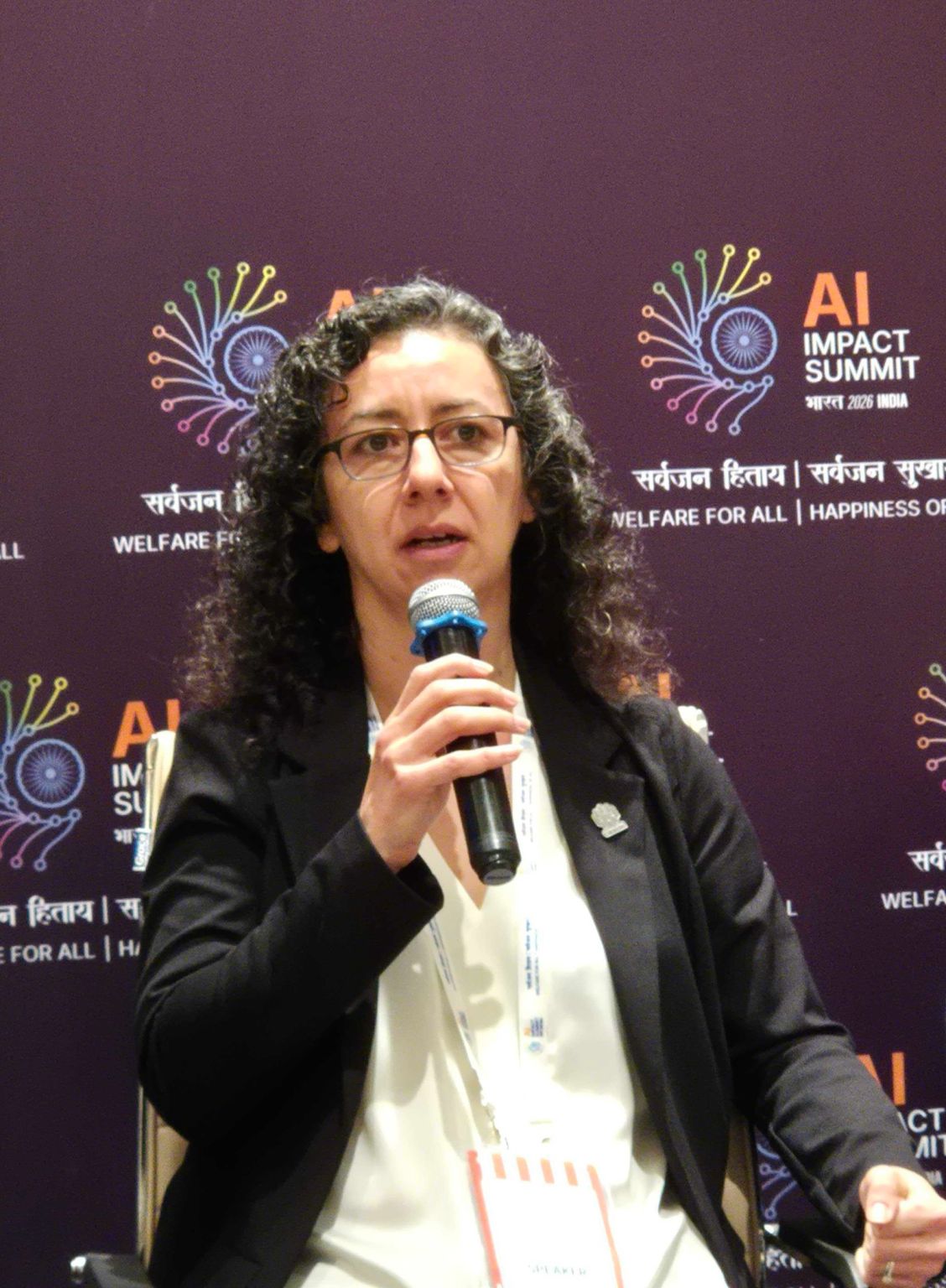
It was a great pleasure to speak on ACM, Association for Computing Machinery's panel on Multidisciplinary AI Governance Beyond Technical Safety and "in the real world" on day 5 of the India AI Impact Summit Friday alongside a great group of thinkers and practitioners.
A few points that stuck with me from the panel, and a few I wish I'd had more time for:
💡 Sara Hooker asked for precision, and provided it, to a conversation that is too generic. Her point: stop saying "we want safety" as if it's costless. Building AI systems involves real trade-offs, and to take the example of multilingual capabilities and safety: the honest thing is to report what languages have been tested, what the results are (on both capabilities and safety), what hasn't been tested, and what the most importants tradeoff - including what the model provider gave up on. Transparency around trade-offs is much more useful than additional high-level principles.
💡 Merve Hickok made the case for us to rethink "AI safety" to include not just medium- and longer-term existential risk (often with analogies to nuclear technology, cyberattacks, etc.), but also the near-term real, immediate harms we face already today - and here, I would see Grok's deepfake nudification features that politicians around the world have rightly shut down in the last month as a slightly hopeful example.
💡 I made the argument we are likely to see something go pretty wrong with AI fairly soon - it's hard to say exactly what, but I'd be shocked if we don't see something soon. When that happens, we will face a choice on how to respond, nationally and internationally and as individuals. And the binding constraint that I see for governing AI across the 40+ countries I work - both to capture opportunities and mitigate risks, and at the subnational, national and international level - isn't a shortage of principles. We have too many different, confusing and non-actionable AI principles, but not enough AI state capacity to implement any of them in most countries.
And yet governments (for all their imperfections...) are the only institutions with the legitimacy to synthesise between the competing partial perspectives that technical experts, civil society, and industry each bring to AI. What we are really missing - in the face of exponentially increasing AI capabilities - is for governments to know and understand the looming AI trajectory; to have "situational awareness". But letting any single expert community dominate produces catastrophic blind spots and wears down legitimacy (as we saw during COVID).
A huge thanks to Virginia Dignum and Jeanna Matthews for organising a session that bridged the technical and the political, to Dr. Lourino Chemane from 🇲🇿 Mozambique for sharing the real challenges and opportunities in their AI strategy, to Dame Wendy Hall, Yannis Ioannidis, Neha Kumar, Jibu Elias, Tom Romanoff for a wide-ranging conversation.
#IndiaAISummit #AIGovernance