AI governance · Global South · AI and development
The India AI Impact Summit was really two summits
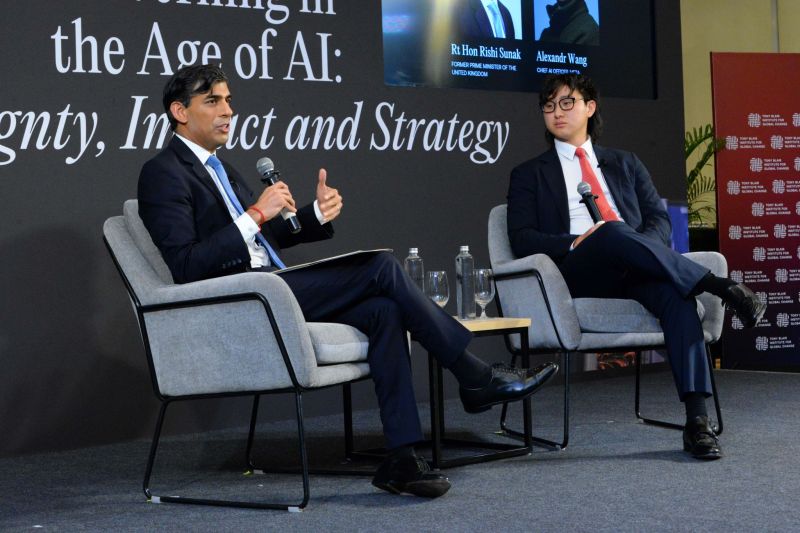
I got back from the India AI Impact Summit almost a week ago, and I'm still processing it, honestly. It was wonderful to be back in 🇮🇳 India after ten years away. But what stuck with me most was how much it felt like there were two summits happening in parallel.
One was the "frontier AI" conversation: anchored in the moment we're in right now, with a real sense that AI capabilities are accelerating, and that 2030 will look radically different from today. Less abstract debate, more attention to where we will be very soon, and what to do about it.
The other was a vital set of conversations about the global majority, with the Summit finally hosted in a Global South country: how we cannot allow AI to be just a US-China race; what AI means for middle powers navigating a tight geopolitical moment and how they can diversify; and the practical constraints that shape real adoption, especially access to compute, the challenges of low-resource languages (i.e. anything other than English, Chinese, and code), and the coming economic implications of AI for all of us. And yet very few here seemed to think 2030 would look at all different from 2026. One panel hosted by the European Commission left me particularly distressed about the EU top brass and their complacency (there is unfortunately no other word) on Europe's role in the world to come and in the geopolitics of AI.
Both conversations are important. But they often felt completely disconnected. More than one person in the frontier AI sessions referenced February 2020: when many smart people still felt COVID was somehow never going to leave China and would never touch their own lives. Not because anyone was careless, but because human brains are bad at understanding exponential change, and because their mental models hadn't caught up to the pace of events.
Tony Blair Institute for Global Change tried to connect the two conferences at our flagship events. The best part of the week for me was our roundtable with senior government AI operators and funding partners, focused on taking AI in government from pilots to scale. We tried to hold both truths at once; that frontier capability is moving fast, and that government implementation of AI systems is constrained, political, and difficult.
I left Delhi intellectually fulfilled, but I can't say I left optimistic. I don't consider myself an "AI doomer," but the dismissal of AI safety and alignment concerns even in explicitly safety-coded forums took me aback. A Global South AI Safety Network launch was renamed the day before to a "Responsible AI Network"; that rebranding tells you something about where the political winds are blowing.
We need to bring the two conversations together, urgently. And I believe the first step is simply showing decision-makers what even consumer-grade AI tools can do today and helping them grasp the best estimates we have of the pace of progress. We need to live in the same world before we can agree on what the next steps are.