Freedom of expression: what’s the point?
Where speech is protected, abuse of power and corruption are rarer and innovation is stronger. The fears of conflict and terror apply mainly to the most closed societies.
Jacob Mchangama and I wrote this report for Justitia, a think tank in Copenhagen, to test the claims made for and against free speech against the evidence. We combined a review of research with our own analysis of opinion surveys and data on most of the world’s countries.
Most people value freedom of expression, though less for groups they fear. Stronger protection of the press goes with fewer human rights abuses, less corruption and more innovation. The common fear that free speech inflames religious conflict and terrorism finds support only in the world’s most closed societies, where a first opening can raise the risk; elsewhere, conflict is rarer where speech is freer.
The worst cases of hate speech fuelling mass violence, in Rwanda and Nazi Germany, involved propaganda backed by the state. Most of this evidence is correlation and case study, and we are explicit about that.
Written largely by Claude and reviewed by me. How this was made
Original publicationJustitia, 2017 (Danish); English edition 2018 ↗
Report in English (PDF) ↗Rapport på dansk (PDF) ↗All research →
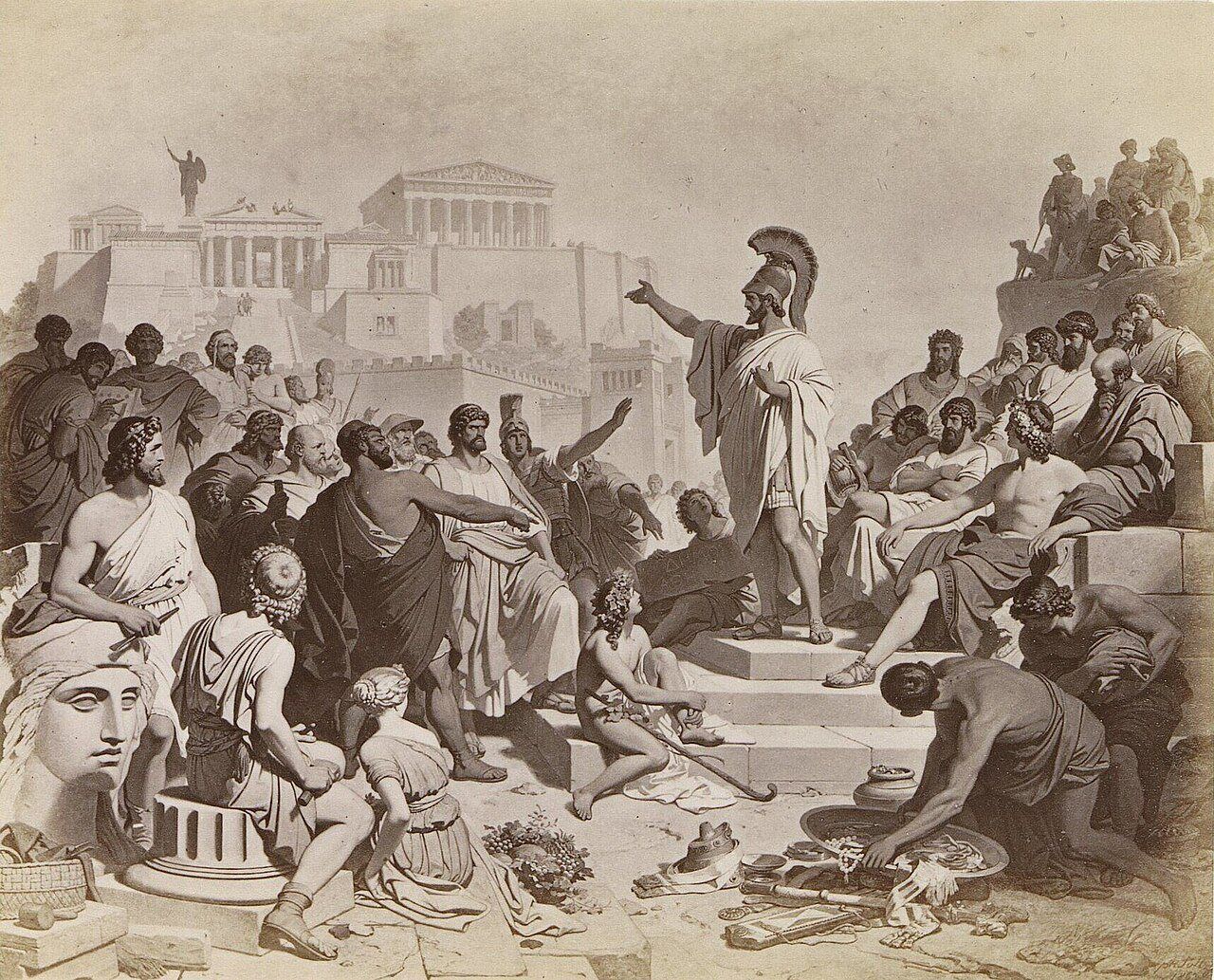

Arguments about free speech are usually arguments about principle. We ask a narrower question: what does freedom of expression actually do? It is an old question. Thucydides has Pericles tell the Athenians that “the worst thing is to rush into action before the consequences have been properly debated.” What is newer is the ability to check some of the claims against data covering most of the world’s countries.
When we wrote it, the trend was running the wrong way. Freedom House reported that press freedom had fallen to its lowest level in 13 years. Of the 65 countries it examined in 2016, 15 had shut off access to the internet on various occasions, and 24 had restricted access to social media and messaging apps.
We start from a minimal theory of why speech is restricted. Information lets ordinary people rein in the powerful, by publicising abuses, coordinating protests and eventually removing them, so the powerful have reasons to stop it. A second motive is feeling: many people want religious symbols, national heroes and moral principles protected from attack. The two often work together, in what we called “coalitions of convenience between thugs and zealots”.
Russia’s laws against extremism are popular, but most of the 233 social media users convicted under them in 2016 had criticised the government’s policies on the war in Ukraine. In Pakistan, blasphemy laws are often used as weapons in personal disputes, including quarrels between neighbours over land, and especially against religious minorities.
Part 1 · What people think
Most people want free speech, but less of it for those they fear
The European Social Survey asked people in 2012 whether, for democracy, everyone should be free to express their political views openly even if they are extreme, whether extreme views should be prevented, or whether it depends on the circumstances.
29 European countries, 2012
Share saying everyone should be free to express political views openly, even extreme ones
European Social Survey round 6, 2012, as drawn in the report’s Figure 1 (p. 7). Values traced from the report’s chart; shares of those answering.
In every country surveyed, a majority chose freedom for everyone. The share runs from almost 90% in Denmark and Iceland down to just over half in Hungary.
In Hungary, 30% said extreme views should be prevented and about a fifth said it depends. In Denmark, fewer than one in ten wanted them prevented.
A Pew survey of 38 countries asked whether it is very important that people can say what they want without government censorship. In the typical country of each region, the share answering “very important” was highest in the Americas, 70%, and lowest in the Middle East, 43%.
Even so, in all 38 countries more than half said it was very or somewhat important that people can speak freely and that the media can report without censorship.
Support for free speech in principle has always been softer in practice. In the decades after the Second World War, surveys found that majorities even in established democracies would not extend free speech to groups they saw as threats, such as communists and Nazis. Denmark, near the top of the European ranking, shows the same pattern: Danes show little tolerance for neo-Nazis, biker gangs and Islamist fundamentalists.
Centre-left parties and their voters strongly support the clause of the criminal code that bans racist speech, and a centre-right government barred “hate preachers” from entering the country with broad support in parliament. In June 2017, all nine parties in the Danish parliament voted to abolish the blasphemy clause.
Popular support is also not the same as protection. Many countries are not democracies, so voters’ preferences do not decide what governments do, and even in democracies voters struggle to see which freedoms are quietly narrowed. Gangs, terrorists and media owners can silence people too.
Measured by Freedom House and the Varieties of Democracy project, freedom of expression rose sharply after 1990, then slipped back to levels last seen before 2000. In Western Europe, press freedom has declined since 2005, most of all in the English-speaking world, where laws against terrorism and concentrated media ownership weigh on it. Between 2000 and 2016, freedom of expression fell markedly in Russia, Turkey, Egypt, Thailand and Poland, and rose in Tunisia, Liberia and Peru.
Part 2 · What it does
Danger peaks in half-open societies
The usual case for restricting speech is that it prevents harm: that unchecked speech about religion, race and ethnicity incites conflict, that extremists use it to recruit, and that democracy can talk itself to death. The usual case for protecting speech is that it exposes abuses of power and corruption, protects minorities and helps new ideas spread.
To weigh both, we combined datasets on press freedom with data on conflict, terrorism, human rights, corruption and innovation, and drew the relationship across countries with a smoothed trend line. These are correlations without statistical controls, and the direction of cause can run either way: wealthy, peaceful countries may simply be able to afford a free press. Where we could, we set the correlations beside studies with stronger designs.
Six outcomes against press freedom
The report’s smoothed trend across countries. Across: press freedom, from least (0) to most free (100)
Trend lines traced from the report’s Figures 6, 7 and 8 (pp. 16, 21), 9 and 10 (p. 26), and 11 and 12 (p. 29). Shaded: scores from 0 to 30, where the report finds conflict and terrorism rising slightly with freedom. Dashed: terrorism against freedom on the internet, 2011 to 2016. Countries scatter widely around every line; these are correlations, without further controls.
Religious hostilities are least common where the press is most free. Among the most closed societies, the first steps of opening go with slightly more conflict, up to about 25 on this scale, roughly the level of Russia, Venezuela and Zimbabwe. From there, conflict falls as freedom rises.
A study of armed conflict by Krishnarajan and colleagues found the same shape after accounting for income, population and the years since the last conflict.
Terrorism follows the same curve: a small rise up to about 30, the level of Egypt and Thailand, then a decline.
Counting deaths, the difference is clearer. Amichai Magen finds that since 2001, terrorist attacks killed on average 6.7 people a year in liberal democracies, 17.8 in less consolidated democracies and 57.2 in closed autocracies. Freedom online (dashed) shows almost no relationship with terrorism once Estonia and Iceland are set aside.
Political terror, scored from Amnesty International’s annual reports, and political corruption both fall as press freedom rises. For corruption the fall is steepest above the level of countries such as Thailand, Ukraine and Egypt.
From the middle of the scale upward, the quality of research institutions and innovation rise with press freedom. Singapore and China are the notable exceptions: innovative with little press freedom.
Some studies get closer to cause. Piero Stanig compared Mexican states, which share most other conditions but differ in how easily officials can sue journalists for libel: where suing was easier, local newspapers covered corruption much less.
In Russia, NTV, the first private television channel not controlled by the government, reached two thirds of the population by 1999, and districts that could watch it gave less support to the government’s party in that year’s parliamentary election. Vladimir Putin had the support of about 2 percent of Russians when he became prime minister in August 1999; his new party won about 24 percent in December, and he won 53 percent in the first round of the presidential election in March 2000. By the 2003 election, NTV belonged to the state-controlled energy company Gazprom.
In Malaysia, support for the governing coalition fell by 11 percent in the short time it took the internet to reach mass use, most of all in districts closest to the country’s fibre-optic backbone, and in 2008 it lost its two-thirds majority in parliament for the first time since 1969.
The strongest argument for hate speech laws rests on the worst cases, and below are three that have been studied closely.
David Yanagizawa-Drott estimates that broadcasts of Radio Télévision Libre des Mille Collines account for about 50,000 of the killings: areas where hills blocked reception saw fewer. The station was financed by the president’s wife and family, and freedom of expression in Rwanda scored only 0.28 to 0.36 out of 1.
In 1930, when radio was critical of the Nazis, areas with reception voted for them less. After five weeks of pro-Nazi broadcasting in 1933, they voted for them more. Once the Nazis controlled the airwaves, areas reached by their radio denounced more Jews, but only where antisemitism had a history.
Freedom of expression rose from almost nothing to the middle of the scale in three years, and social media filled with posts vilifying the Rohingya. But the army carried out the violence, journalists who defended the Rohingya were arrested, and earlier crackdowns, in 1978 and 1991 to 1992, happened when Myanmar was among the most closed countries in the world.
It is not hate speech as one voice among many in the public sphere, but hate speech as state propaganda that poses the greatest threat of ethnic and religious violence, including genocide.
Freedom of Expression: What’s the Point?, p. 20
Calls to genocide such as those broadcast in Rwanda are not protected speech in conventional human rights law, nor under the First Amendment to the United States constitution. The lesson of these cases is that propaganda is most dangerous when the state can drown out every other voice. Censorship is also not the only response to hate speech: research by the Dangerous Speech Project found that calm, empathetic replies on social media often made those posting hateful messages back down, while insults and aggression did not.
Is freedom of expression in crisis?
The evidence suggests freedom of expression, beyond its value in itself, helps protect human rights, expose corruption, support democracy and encourage innovation. So we ended with a warning, because it was under pressure from several directions at once:
- China offered a model of growth without free speech.
- Leaders such as Vladimir Putin and Recep Tayyip Erdoğan combined propaganda and the marginalisation of critics with popular appeal.
- In the United States, Donald Trump called the news media “enemies of the people” and mused about stripping critical networks of their licences.
- Britain, France and Germany were acting ever more forcefully against terrorist propaganda and illegal content on social media, and the European Union was considering measures against fake news.
Fake news poses a double threat: from those who produce it, and from laws against it, which can confirm conspiracy theorists’ belief that the truth is being suppressed and give governments a pretext for censorship.
Polarisation can set off a spiral, because when one side sees its speech restricted, it becomes less willing to defend the speech of the other, much as governments and oppositions in Latin America became less democratic in response to each other. Our expectation was that threats to free expression from governments and private actors would intensify, and that civil society would have to defend journalists and dissidents itself.
I present the report here as we wrote it, with the data available in 2017, and do not review research published since.
What’s the point of freedom of expression? Less abuse, less corruption, more invention.