Can political culture really protect or doom democracy?
Most theories of democracy leave little room for what citizens value. My dissertation tested how much political culture explains differences in democracy and regime change, in regions that break with their country’s regime and in people whose border moved or who migrated.
This research is from my 2016 PhD dissertation and has not been updated since. Later events and studies appear only where marked.
This is the introduction to my PhD dissertation, Culture and Institutions (University of Copenhagen, submitted in 2016, defended in February 2017), and a guide to its interactive editions. Its central question is how much political culture, meaning what citizens value in politics and how hard they press for it, can explain why some countries and regions are more democratic than others, and why regimes break down or open up.
Comparing countries cannot settle this, because democracies may produce democrats as much as democrats produce democracies. So I moved the question to where culture and institutions come apart: regions within countries, a border that moved, and people who migrated. Inherited culture explained less than its champions expected, but even the undemocratic regimes I studied worked hard on opinion, because no government rules wholly without consent.
Written largely by Claude and reviewed by me. How this was made
Original textPhD dissertation, University of Copenhagen, 2016 (PDF) ↗
As force is always on the side of the governed, the governors have nothing to support them but opinion. It is therefore, on opinion only that government is founded; and this maxim extends to the most despotic and most military governments, as well as to the most free and most popular.
David Hume, Of the First Principles of Government, 1741. The epigraph of the dissertation

I began the dissertation with a question about courage. People give their lives in the struggle for democracy. Who is willing to risk theirs for free and fair elections, and how much does it matter for whether a democracy is born, or survives, when some of them do?
When I wrote those lines in 2016, fatigue with liberal democracy was rising, yet the most influential theories of how democracies are born and how they die gave little reason to think that faltering public support would matter. Many political scientists doubted that political culture mattered at all, and some evidence suggested that democracy breeds democrats more than democrats breed democracy, even as policymakers went on explaining corruption and failed democracies by culture.
Part 1 · Why culture matters
No government rules wholly without consent
Hume’s point is that even the most military government depends on the opinion of the people it governs, because force is always on their side. Political scientists have spent decades modelling regimes as bargains between elites, armies and economic interests, but popular opinion keeps breaking into those bargains, through at least four channels.
Where political culture enters regime change
Four channels, by the kind of regime they work in
Drawn from the introduction to the dissertation (PDF pp. 14 to 15), the same argument as the 2017 essay (p. 22). Each bar spans the regime types named for that channel. A diagram of an argument, not of data.
In new and established democracies, illiberal parties can erode democracy, or end it, once enough voters back them, as in Peru after 1990 and, most spectacularly, Germany in 1933.
Popular governments, democratic or authoritarian, can call on their supporters when soldiers move against them, as Turkey’s government did when a coup failed in 2016.
In competitive authoritarian regimes, protests after a stolen election can become the focal point for regime change, if discontent is wide and the opposition can coordinate, as in Serbia in 2000.
Even closed one-party regimes can be undone by committed democrats when their narratives and propaganda stop convincing people, as across much of Eastern Europe after 1989.
None of these channels needs culture to be fixed or ancient, only that what citizens want, and how hard they act on it, can tip the outcome when a regime is under strain. The same holds inside dictatorships. Scholars of authoritarian rule usually study four survival strategies, and mass support and political culture enter each of them.
Four ways authoritarian regimes stay in power
and where mass support and political culture enter each
- 1RepressionPartly about culture
Soldiers may refuse to fire on people who share their nation, faith, ethnicity or family.
The British Empire recruited minorities: Sikhs in India, Tamils in Sri Lanka, the Karen in Burma.
Coercion seen as illegitimate can backfire: Ukraine 2013, Iran 1978, Sharpeville 1960.
- 2CooptationPartly about culture
- 3PerformancePartly about culture
- 4LegitimationEntirely about culture
From the introduction to the dissertation, PDF pp. 15 to 16, as condensed in the 2017 essay, pp. 22 to 23, whose examples these are. In the introduction’s words, legitimation is “entirely and not only partially about culture and popular support”; the other three are partly about it.
Soldiers and police sometimes refuse to fire on people who share their nation, faith or family, which is why the British Empire recruited minorities, Sikhs in India, Tamils in Sri Lanka and the Karen in Burma, to police larger groups. Coercion that people see as illegitimate can backfire.
Buying off elites and citizens works less well on people with strong ideological commitments or a strong sense of separate identity, and “good democrats make bad targets” for vote buying.
Delivering growth and public goods helps every regime, but publics weigh results differently. Where people care about how decisions are made, and not only about what they deliver, performance buys less support.
Legitimation, persuading people that a regime deserves to rule, is entirely about culture. Regimes claim a right to rule through a leader’s charisma, an ideology, tradition, expertise or religion, or through what they deliver: order, growth, redistribution, or defence of the nation or of a group.
Which claims work depends on what people already value, and regimes try to move those values onto ground where they have the advantage.
By political culture I mean the deep-seated values and practices that shape what citizens demand in politics and how hard they press for it. Culture, in this sense, is information learned from other people, by teaching and imitation. People copy the majority and they copy people of standing. That gives institutions a way in: by making visible how others behave, and by deciding who gets resources and status, institutions can change what people learn. The essay I wrote on this after the 2016 American election, The return of political culture, sets out the argument at more length.
Part 2 · The design
Three links between culture and regimes
Cross-national studies had found strong correlations between cultural traits such as individualism, egalitarianism and trust, and democratic, clean government. But they compare countries at one point in time, and democracy and clean government themselves raise trust and support for democracy. To get around that, I split the big question into links that can be studied one at a time, in settings that hold more of the rest still. The dissertation’s own overview of its chapters, redrawn below, has three corners: national institutions, political culture and subnational regimes.
The dissertation in one picture
Three corners and the links between them, redrawn from the introduction’s Figure 1
Institutions shape culture
Borders that moved, people who moved
2Getting to Denmark3Nordic trust may be younger than it looks4Where you live matters more than where you grew upCulture and democracy
Regions of one country that differ in religion
7Christian and Muslim regions are similarThe centre and the regions
Regime change below the nation
5Regime change in miniature6Transitology in short pantsRedrawn from Figure 1 of the introduction to the dissertation, PDF p. 19, with the chapters’ interactive editions linked. Research questions: PDF pp. 17 to 18.
The first question is the grand one: how does culture affect political institutions, and how do institutions affect culture? The second came from moving down to regions: how does regime change inside a country differ from regime change in a whole country, and how do national institutions shape it?
If political culture holds regimes up or brings them down, it has to be more than a reflection of the regime people live under. Chapters 2 to 4 test how persistent it is.
People who stayed put while the border between Denmark and Germany moved, in 1864 and again in 1920, show what a change of state does to political habits. Immigrants who carry one country’s habits into another, and their children, show the same from the other side. Chapter 3 reviews why the Nordic countries trust so much in the first place.
The direct test compares regions within countries, which share a national government, a national history and the same foreign allies. Chapter 7 asks whether African regions with more Muslims are less democratic than other regions of the same country, as a cultural explanation of the gap between Muslim-majority and other countries predicts.
Regional regimes do not only reflect local culture. National governments, parties and courts also make and break them. Chapters 5 and 6 ask when local actors decide a region’s regime and when the centre does, and how regime change inside countries compares with regime change between them.
Chapter 8 introduces the geographical information systems that make these comparisons possible, by joining maps of borders, peoples, regions and survey answers. Each chapter can be read on its own, and each links to its interactive edition.
Part 3 · The evidence
Inherited culture explained less than expected
Across the designs, the culture people inherited explained less of democracy and political behaviour than the deep-history view suggests. Each panel below has its own scale: a national or inherited difference in grey, and what remains of it when people share institutions, in blue.
What each design found
Grey: the inherited or national difference. Blue: what remains locally
Each panel has its own scale; compare within a panel, not across. Africa: the between-country slope is a descriptive calculation from the archived data (−0.27 points on the 1 to 4 scale); the within-country estimate is Table 1, model 5. Trust: published Table 2 and Table 3. Migration: published Table 2, second generation. 95% intervals computed here as ±1.96 reported standard errors. Details on each chapter’s page.
Between African countries, more Muslims go with lower democracy ratings, mainly because of the Arabic-speaking north. Between regions of the same country, with living conditions held equal, the estimate is +0.01, close to zero.
Muslims want democracy as much as Christians and know more about who governs them. Whatever holds back democracy in Muslim-majority countries seems to work through states, their histories and their alliances, more than through believers.
Danes trust strangers far more than Germans do, 1.72 points on a 0 to 10 scale. Yet North Schleswig, German for 56 years, now trusts about as much as its Danish neighbours, −0.14, and the old Danish duchies in Germany about as much as theirs. The border’s mark on voting faded within 40 to 70 years.
Immigrants’ political participation tracks both the country they came from and the country they live in. For their children, the new country’s pull is 0.96 and the old country’s 0.17.
Once people share institutions and neighbours, the differences they inherited shrink. That makes inherited culture a weaker explanation of why some countries are less democratic than others. It does not make political culture irrelevant, because the culture people learn from their institutions can in turn hold those institutions up or wear them down.
Each finding has its own edition:
- Christian and Muslim regions are similar moves the debate about Islam and democracy from countries to 492 African regions.
- Getting to Denmark follows the border through two changes of rule and three kinds of evidence.
- Nordic trust may be younger than it looks, written with Peter Thisted Dinesen, places the Nordic countries in Europe and in history.
- Where you live matters more than where you grew up, with Dinesen as lead author and published in Political Geography in 2022, follows immigrants and their children across Europe.
Part 4 · Below the nation
Political culture inside subnational regimes
Only the Africa chapter tests political culture against democracy directly, and it measures democracy as people perceive it, because no one had measured it for every region. Yet regimes vary a great deal inside countries, in how free elections are, how much the press can say and how freely officials repress. Do those differences follow differences in political culture?
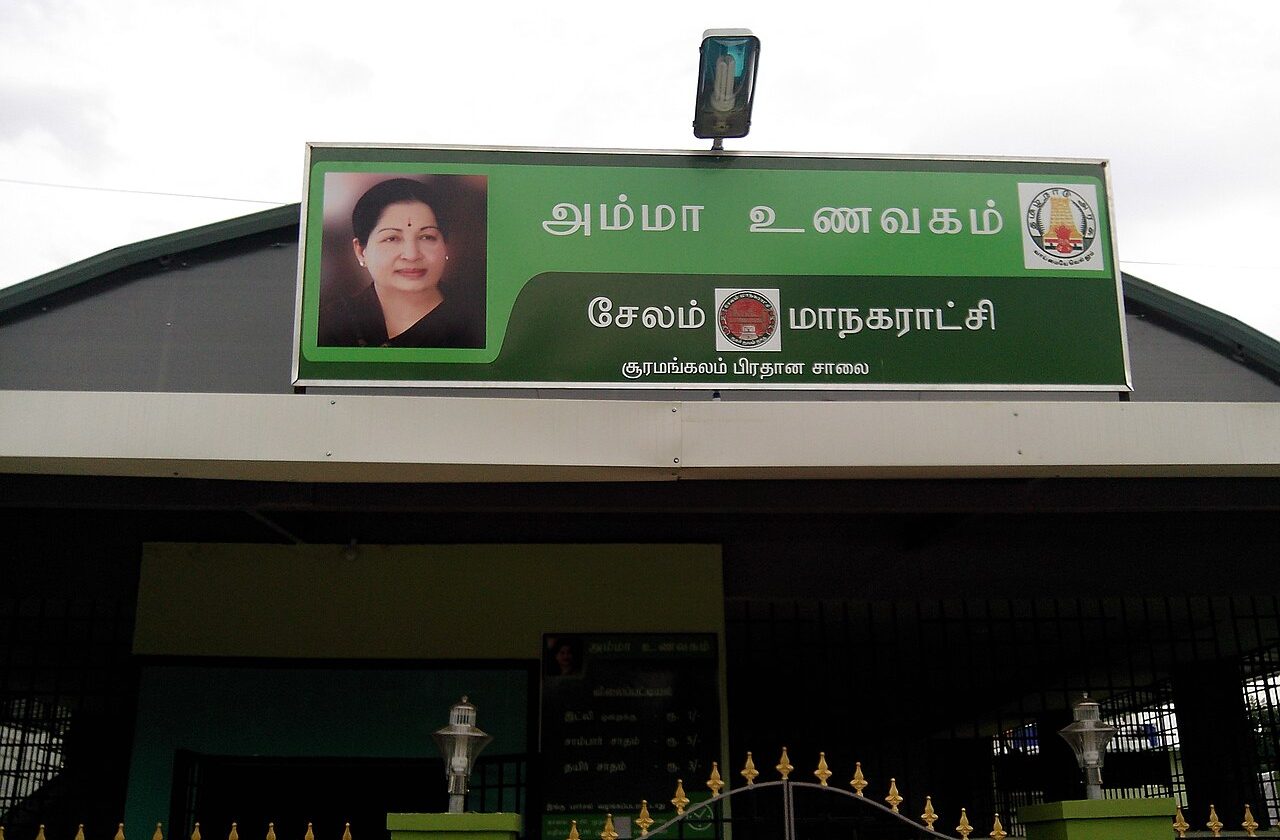
Regions that run regimes unlike their country’s are often culturally or linguistically distinct, have a history of independence or autonomy, and lie on the geographical edge of the country. All three hold for Tamil Nadu, though not for Bihar or Sverdlovsk. Liesbet Hooghe and Gary Marks call such places Rokkan regions, after Stein Rokkan’s work on centre and periphery. When populous, they often set off a race to decentralise: their autonomy prompts other regions to demand the same, which gives them still more room to run regimes of their own.
Regions that run regimes unlike their country’s
Brass: the three enclaves I studied most closely. Blue: other examples from the introduction, chosen because their regimes stand out
- Tamil Nadu, India. Jayalalithaa’s personality cult, built on Tamil identity against perceived Hindi dominance.
- Bihar, India. Lalu Prasad Yadav’s lower-caste regime, an authoritarian enclave in a democracy, 1990 to 2005.
- Sverdlovsk, Russia. Eduard Rossel’s competitive enclave inside authoritarian Russia, 1995 to 2004.
- The American South, United States. One-party rule in a culturally distinct region, from the late nineteenth century to the mid-twentieth.
- Oaxaca and Yucatán, Mexico. Large indigenous populations and less responsive state regimes, with some legally communitarian systems that use open votes.
- La Rioja, Santiago del Estero and Jujuy, Argentina. Provinces with large indigenous populations and less democratic regimes.
- Northern Cameroon, Cameroon. Precolonial Lamido rulers keep wide powers to legislate, judge and imprison.
- Donetsk and Kharkiv, Ukraine. Russian-speaking fiefs of the Party of Regions from 2002 until Yanukovych fell in February 2014.
- Tatarstan, Russia. One of Russia’s ethnic republics, which are generally less democratic, with a history of independent statehood.
- Kurdistan, Iraq. An enclave of democracy in Iraq.
- The Tamil north and east, Sri Lanka. A quasi-totalitarian counter-state under the Tamil Tigers, 1983 to 2009, and militarised since.
- Mindanao, Philippines. The Muslim-majority south: separatist rebellion, Islamist terrorism and authoritarian enclaves.
- Yogyakarta, Indonesia. A monarchy whose king leads the region, after two centuries as an independent sultanate, 1745 to 1945.
Without systematic data on democracy below the national level, these cases cannot settle the question, because they were picked out for their unusual regimes. What they can show is what political culture looks like inside such regimes. Two of the three I studied most closely were electoral authoritarian enclaves inside democratic India, and the third a democratic enclave inside authoritarian Russia. The Indian enclaves had to win votes, even on a tilted playing field, so legitimacy, branding and propaganda loomed large.
How regimes claim the right to rule
Procedural claims are about how rulers are chosen and decide; substantive ones about what they deliver
From the introduction to the dissertation: legitimation bases, PDF p. 16; Bihar, Tamil Nadu and Sverdlovsk, section 1.4, PDF pp. 32 to 35, citing Witsoe (2013), Ninan (2003), The Hindu (2016), Forbes India (2012), Gel’man and Golosov (1998) and Carter (2015). The introduction names caste in Bihar and language in Tamil Nadu as the group basis; marks show the bases it names for each regime.
Regimes that do not rest on free and fair elections can claim legitimacy on procedural grounds, how rulers are chosen and decide, or on substantive grounds, what their rule delivers. The menu is long, and which items a regime can use depends on the culture and structure of the place it rules.
Lalu Prasad Yadav was a charismatic, populist champion of the lower castes and Dalits in a state where the upper castes, about 15 percent of the population, had dominated since colonial times. In 1991 he coined the slogan Bhurabal hatao, “wipe out the upper castes”, and Muslims backed him for protecting them from the Hindu nationalist violence that hit other states.
When critics called his rule “Jungle Raj” for its crime and corruption, he turned the charge round: if Bihar is a jungle, it is because the upper castes think you and I are animals. Journalists were threatened, and it took a newspaper in Kolkata to break the fodder scandal in 1996.
Jayalalithaa, a former film star, led Tamil Nadu from 1991 to 1996, from 2001 to 2006 and from 2011 until her death in December 2016, ruling through loyal lieutenants when corruption cases forced her from office. Tamil cinema is a symbol of Tamil nationalism against perceived Hindi dominance.
Before the 2016 election her image was on walls, scooters, police cars, flags and bins, and some supporters painted her portrait in their own blood. She owned most of a leading television channel, and between March 2011 and July 2016 she and her government filed 213 criminal defamation cases against opposition politicians and critical media.
Next to them, Eduard Rossel was positively bland, an effective representative rather than a messiah. Its capital, Yekaterinburg, had been a closed city with a highly trained scientific and technical workforce, and the region had produced reformers such as Boris Yeltsin. Opposition groups appeared there in January 1988, earlier than elsewhere in Russia, and in March 1990 democrats won 60 of 200 seats on the Yekaterinburg city council.
Rossel’s democratic enclave rested on its growth record, on his bargaining with Moscow and on liberal politics, and he drew in foreign investment and Western aid.
Each regime drew on the culture or the structure of its region to build a story that set its people against outside elites: lower-caste Biharis against the upper castes of the Congress party, Tamils against a Hindi majority, and a western-oriented, reformist electorate against the post-communist nomenklatura. The two authoritarian enclaves leaned on charisma, caste and language, and the democratic one on performance.
Part 5 · Who decides
Regions break away locally, and the centre brings them back
Local political culture can only explain a region’s regime if local actors decide it. Chapters 5 and 6 ask when they do. In Bihar and Sverdlovsk, strong local coalitions took their regions away from the national regime type, against national actors who tried and failed to stop them. Years later, national actors brought both back into line: in Bihar through President’s Rule and the Election Commission in 2005, in Sverdlovsk through Vladimir Putin’s centralisation around 2004.
Four kinds of subnational regime change
Rows: the country’s regime. Columns: whether the change opens an enclave or closes one
Chapter 6 adds how such transitions happen. Asking who leads, where their power comes from and whether they break with the national state gives eight modes of transition. The four led by local incumbents, local oppositions or local insurgents look a good deal like transitions in whole countries. The four that run on power from outside the province have few national parallels. Edward Gibson had written that subnational democratisation “is not democratization in short pants”; for transitions led by local actors, I found that it often looks much like it.
Together the two chapters suggest a rule of thumb, in democracies and autocracies alike: transitions away from the national regime are less likely to be led by the centre, and transitions back to it more likely. Where local actors lead, local political culture has room to matter; where the centre leads, it matters less. The editions Regime change in miniature and Transitology in short pants tell both stories.
Part 6 · The wrong question?
Institutions teach culture, and culture holds institutions up
Does culture affect institutions, or the other way around? This may be the wrong question.
The introduction to the dissertation, 2016
Most of what I found shows institutions and settings reshaping culture. It does not follow that the culture they produce is irrelevant. A democracy whose citizens have learned to vote, organise and trust each other is harder to dismantle than one whose citizens have not, and a dictatorship that has taught its subjects to see it as legitimate needs less repression.
The practical implication is to study how culture changes, not only how it persists. Migrants in Europe are changed by the people they live among, above all when they do not live in enclaves of their own. In North Schleswig after 1920, it was not only the Danish administration that returned. Danish newspapers and civic organisations that German rule had kept out came back too, and with them the habits of the rest of the country.
These conclusions are narrower than the grand question. They concern political socialisation and immigration, border changes and the incorporation of new citizens, and government below the national level. They are also consistent with each other, and they all cut against the idea that a people’s political culture is a fixed inheritance that decides whether it can be democratic.
Part 7 · Why it matters now
A decade of data on political culture
After a long hegemony of democratic ideas, the coming years will likely provide us with lots of data to test how resilient new and consolidated democracies really are to major shifts in political culture.
Assessing and Measuring Political Culture in the Trump Era, June 2017
The years since have supplied plenty, above all in the United States, where a president refused to accept an election defeat in 2020, his supporters stormed the Capitol on 6 January 2021, and he returned to office in 2025. Much of what decided those weeks was behaviour: officials who certified results, legislators who counted the votes, and people who tried to stop the count. That is political culture in the sense used here, and it can be measured. The essay’s edition has a short afterword with the sources.
My findings speak to several arguments that have only grown louder since. For established democracies they are a warning, because what can be learned can be unlearned: fifty-six years of German rule left North Schleswig voting 10 to 12 points less than its Danish neighbours when it returned. For debates about Islam and democracy, the gap between countries is real, but ordinary Muslims’ political culture does not explain it; states, their histories, their alliances and their treatment of religious minorities do more of the work.
For reformers who want to get to Denmark, they are encouraging: Danish trust looks younger than it seems, and the border evidence suggests that what institutions built in two generations, others can build. For debates about immigration, the evidence is that newcomers’ political habits move towards those of the people around them, slowly in the first generation and much further in the second.
I now work with governments, funders and nonprofits on what transformative AI is likely to mean for low- and middle-income countries. The habit of mind I take from this dissertation is to look for what institutions can build within a generation, and to be sceptical of explanations that treat a society’s capacities as fixed by its history.
Government rests on opinion. But opinion changes with what people see around them.
The chapters
- 1IntroductionCan political culture really protect or doom democracy?Culture and Institutions, chapter 1Chapter PDF ↗
- 2Borders moveGetting to DenmarkTrust in Scandinavia: Findings from Moving Borders Between Denmark and GermanyPublished · Scandinavian Political Studies 41(1), 2018, 22–48Chapter PDF ↗
- 3Borders moveNordic trust may be younger than it looksSocial Capital in the Scandinavian Countries: Routledge Handbook of Scandinavian PoliticsPublished · Routledge Handbook of Scandinavian Politics, 2017, 161–173Chapter PDF ↗
- 4People moveWhere you live matters more than where you grew upThe (Re)socialization of Participatory Political Culture: Immigrants' Political Participation Between Their Contemporary and Ancestral CountriesPublished · Political Geography 98, 2022, Article 102650Chapter PDF ↗
- 5The centre and the regionsRegime change in miniatureRegime Change in Miniature: An Organizing Typology of Subnational Regime TransitionsUnpublished dissertation paper · 2016Chapter PDF ↗
- 6The centre and the regionsTransitology in short pantsTransitions from Subnational Authoritarian Rule: Transitology in Short PantsUnpublished dissertation paper · 2016Chapter PDF ↗
- 7Culture and democracyChristian and Muslim regions are similarChristian and Muslim Regions Are Similar: Religion, Political Culture and Subnational Democracy in AfricaUnpublished dissertation paper · 2016Chapter PDF ↗
- 8The toolsEverything happens somewhereIt's the Geography, Stupid!: An Introduction to Geographical Information Systems in Political SciencePublished · Statsvetenskaplig Tidskrift 118(2), 2016, 249–265Chapter PDF ↗
Alongside the dissertation
- ·Essay · 2017The return of political cultureAssessing and Measuring Political Culture in the Trump EraComparative Democratization 15(2), American Political Science Association
- ·Report · 2017Freedom of expression: what’s the point?with Jacob Mchangama, for JustitiaResearch report, Danish 2017, English 2018