Transitology in short pants.
Local autocrats govern parts of many democracies. When their rule ends, provinces sometimes behave like countries, but half of the eight ways out run on power from the capital or from abroad.
This research is from my 2016 PhD dissertation, was never published, and has not been updated since. Later events and studies appear only where marked.
Political science knows a great deal about how countries leave authoritarian rule, and much less about how provinces do, although governors who rig elections and harass their critics are common in democracies such as Mexico, India, Argentina, the Philippines and Brazil. When I wrote this paper in 2016, the literature on such enclaves had described two ways out, both driven from outside the province: a national government forcing a local autocrat from office, and a national party helping a local opposition to win.
I start instead from the much larger literature on national transitions and adapt it with three questions: who leads the change, where their power comes from, and whether they break with the national state. The answers give eight modes, each shown here with one case, from the American South in the 1950s to southern Sudan in the 1980s.
Four of the eight, those led by local incumbents, local oppositions and local insurgents, look a good deal like national transitions. The four that run on power from outside the province have few national parallels, and the two paths the literature had studied are among them. By studying only those, I argue, the field risked overstating how different provinces are from countries.
Written largely by Claude and reviewed by me. How this was made
Original textDissertation chapter 6, 2016 (PDF) ↗
On 23 November 2009, a group set out in Maguindanao, a province of the Autonomous Region in Muslim Mindanao in the southern Philippines, to register Esmael Mangudadatu as a candidate for governor. Mangudadatu was a former mayor from a prominent local family. He was challenging the son of the governor, Andal Ampatuan Sr., who had served the three consecutive terms the law allows and meant to hand the office on, a common way for Philippine political dynasties to outlast term limits. The Ampatuans were known for electoral fraud, for spending public money on their campaigns, and for private militias that harassed and sometimes murdered journalists, opposition politicians and independent-minded judges.
On the way, 58 people were killed. Among them were Mangudadatu’s wife, three of his sisters, his supporters, lawyers, and 34 journalists who had come to cover the registration.
In response, President Gloria Arroyo’s party expelled the Ampatuans, a state of emergency was declared, 3,000 infantry troops and two tanks were sent into the province, and the governor was forced from office. His son was barred from the 2010 election and charged with the murders. Mangudadatu registered, won the governorship in 2010, and was re-elected for a third term in May 2016. When I wrote the paper later that year, the province did not appear to have become fully democratic.
The literature calls this a centre-led transition, in which a national government removes a local autocrat and reorganises local politics. By 2016 it was one of two ways out of subnational authoritarian rule described in detail. The other, which Edward Gibson calls a party-led transition, runs through elections, as a national party channels money, expertise and endorsements to a local opposition until it wins.
Gibson, the pioneer of the field, expected the two to cover the ground in his 2013 book Boundary Control: “There are undoubtedly a greater variety of potential transition types, but these two are general enough for us to expect that others will be subsumed by them.” In a footnote, I replied that the paper “wholeheartedly disagrees with this assessment.”
How many ways out are there, and how many of them resemble the ways countries leave authoritarian rule?
Part 1 · The puzzle
Provinces have regimes too
Subnational politics are often less democratic, less transparent and less institutionalised than national politics. The traffic also runs the other way. In authoritarian countries, decentralisation sometimes gives an opposition room to hold enclaves of democratic rule, or lets different kinds of local authoritarian rule grow up side by side. Countries contain more than one regime, and those regimes change.
The scholars who studied these enclaves mostly treated their politics as a thing apart. Gibson’s line is the best known.
Subnational democratization is not democratization in short pants.
Edward L. Gibson, Boundary Control (2013), p. 9, as quoted in the paper
Others agreed, among them Robert Mickey, who in his history of how one-party rule ended in the American South wrote that “dynamic interaction between and among national and subnational polities is decisive.” Anjali Bohlken, writing on how local elections are introduced, was sceptical of treating local and national democratisation as a “unitary phenomenon.” They had good reasons: a province is tied to its national government by lines of authority, institutions and personnel that no sovereign state has.
I try to avoid two shortcuts: treating subnational regime change as exceptional, and treating it as identical to national regime change. I work through the literature on national transitions, which took shape with Guillermo O’Donnell, Philippe Schmitter and Laurence Whitehead’s Transitions from Authoritarian Rule in 1986 and came to be called transitology, and ask which of its findings survive the move down a level, which is where the title comes from.
Transitology’s central idea is the mode of transition: the process by which a regime changes, distinguished above all by “the identity of the primary agents of change.” Modes matter because they predict what comes after. Countries that leave authoritarian rule in different ways tend to differ afterwards in conflict and stability, in whether another authoritarian regime follows, and in the quality of the democracy they get.
The definitions stay close to those used for countries. A regime is the set of rules that decide how leaders come to power and stay there, and a transition is the interval between one regime and the next. A transition need not end in democracy; it only has to dissolve the old rules. A subnational government counts as democratic when its offices are filled through reasonably free, fair and somewhat inclusive elections with more than one party, faction or candidate, or, where governors are appointed, when national elections in that territory meet the same standard. If any condition is missing, the regime is authoritarian.
Part 2 · The typology
Three questions, eight answers
By 2016 the study of national transitions had been organised for some thirty years around two questions. The first is who drives the change: the elites in and around government, or the masses outside it. The second is how the change happens: by compromise or by force. Terry Lynn Karl and Philippe Schmitter’s 1991 version crosses the two questions to give four modes, and it is where the typology begins.
How countries leave authoritarian rule
Four modes of national transition, after Karl and Schmitter (1991)
National modes: Karl and Schmitter (1991), as reproduced in the paper’s Table 1 (PDF p. 168). Subnational modes and cases: Tables 2 and 3 (PDF pp. 170 and 172). Shaded cells draw their power from outside the province. “Centre-led” follows Gibson’s term “center-led transition”.
Elites who compromise make a pact, as in South Africa and Poland. Elites who use force impose change, as in Taiwan, or Western Europe around 1900. Masses who stay peaceful bring reform, as in the Philippines. Masses who use force make a revolution, as in Iran in 1979.
Regime change imposed from abroad is sometimes added as a fifth mode.
A province has actors at two levels: its own, and those outside it, such as the president, national parties and foreign governments. So each row splits by where the actors’ power comes from.
Local actors draw supporters and money mainly from inside the province, non-local actors from outside it, wherever they live.
A national revolutionary who wins takes over the whole army and police, which provincial actors almost never can. If they turn local forces against the national state, they break with it, and become territorial rebels rather than a provincial government.
So force is replaced by rupture: secession, or an attempt to overthrow the state.
Three questions with two answers each give eight modes. Who leads, and whether they break with the state, are much as in national transitions. Where the power comes from is new, and particular to politics with more than one level.
The first question has a clear answer. The other two are matters of degree, and real cases fall between the extremes.
I illustrate each mode with a case. Many come from large countries, whose provinces get more attention from scholars, governments and the media.
The shaded rows draw their power from outside the province.
Like a map, the typology does not explain which way out a province takes, but it gives later studies categories that can serve as causes or outcomes, and it connects literatures that rarely meet, on authoritarian enclaves, rebel governance in civil wars, governance across levels, democracy promotion from abroad, and national transitions.
Part 3 · Incumbents
Governors, presidents and foreign heads of state
The top half of the typology covers transitions led by people who already hold office: governors and provincial military commanders, presidents and national ministers, foreign heads of state and their armies. All have a state apparatus and substantial resources behind them, even when they break with the national state. Two of the four modes keep the province inside the national system. The other two install a rival regime that the national state no longer reaches.
Four ways out led by incumbents
Governors, presidents and foreign heads of state: one case for each mode, as classified in the chapter
Incumbent-ledincumbents · local power · no rupture
US Outer South, 1953–65
- Competitive governor’s races: Virginia 1953, Florida 1960, Texas 1962
- Mickey’s term: “acquiescent democratization”
Cases from Table 3 (PDF p. 172); facts from the case descriptions, PDF pp. 173 to 183. Marked points are approximate locations. Map: Natural Earth 1:110m, today’s borders (South Sudan became independent in 2011).
Rulers reform the regime themselves, as soft-liners gain the upper hand. In the Outer South of the United States, Democratic leaders in Virginia, Florida, Texas and other states chose not to fight the rising Republican and Black opposition by undemocratic means.
Virginia had a competitive governor’s race in 1953, Florida in 1960, Texas in 1962.
The national government removes a local autocrat, and the province stays inside the national system. Besides Maguindanao, examples include the American Deep South in the 1960s and Argentina’s Catamarca and Santiago del Estero.
Sri Lanka’s government retook the territory of the Liberation Tigers of Tamil Eelam by force in 2008 and 2009.
A provincial leader uses the province’s own institutions and forces to break with the national state. Aslan Abashidze, appointed to govern Adjara in 1991, used Georgia’s civil war to escape central control.
He raised a militia of up to 1,000 men, took over the customs posts on the Turkish border and their revenue, and jammed Georgian television.
Leaders from outside the country coerce a change of regime in a province, breaking it from its home state. From 1991, a no-fly zone kept up by the United States, Britain and France shielded Iraqi Kurdistan from Saddam Hussein’s forces.
Dependent on Western patrons, its rulers courted them by promoting human rights and democracy.
The American South shows where the line between two of these modes runs. In the Outer South, in states such as Virginia, Florida, Tennessee and Texas, the regimes opened up from within. Party leaders chose not to fight the rising Republican and Black opposition by undemocratic means, and carried out the Supreme Court’s decisions. Pro-business moderates wanted to avoid racial violence and the damage it would do to the economy, and party leaders did not want to alienate newcomers in the growing cities and suburbs. Virginia had a competitive election for governor in 1953, Florida in 1960 and Texas in 1962. Robert Mickey calls this “acquiescent democratization”: these enclaves “quickly submitted to pressures to democratize, or even preempted some of them through ‘indigenous’ reforms.” I count it as incumbent-led.
In the Deep South, the regimes held out until Washington intervened in the 1960s, most decisively with the Voting Rights Act of 1965. That is a centre-led transition: national actors changed the rules over the heads of the local incumbents. Mickey treats the Outer South as a variety of centre-led transition too, since its reforms answered pressure from outside. I put it with the incumbent-led cases because local leaders adopted the reforms themselves, in anticipation of imposed ones that would have left them worse off. The difference is one of degree, which is why I treat the dimensions as continuous.
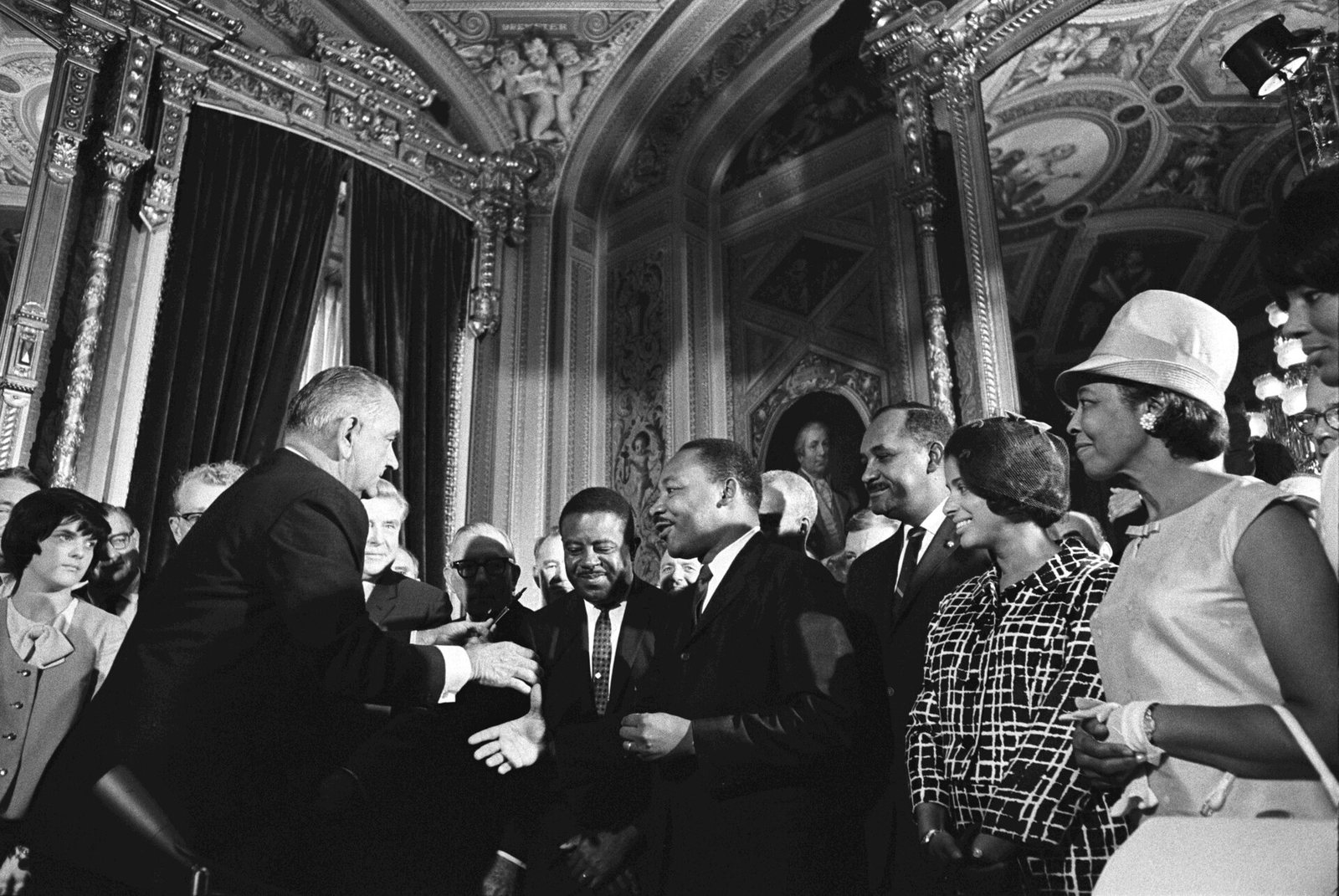

Adjara shows that one province can pass through more than one mode. Abashidze’s regime was personalist and authoritarian: he disbanded the provincial council and set his paramilitaries on the opposition, while his party, Revival, took more than 90 percent of Adjara’s vote in every election from 1995 to 2003. Russian support helps explain why the national authorities hesitated to remove him. In early 2004 the Georgian government massed troops on the border to force him out, which I list as a centre-led transition.
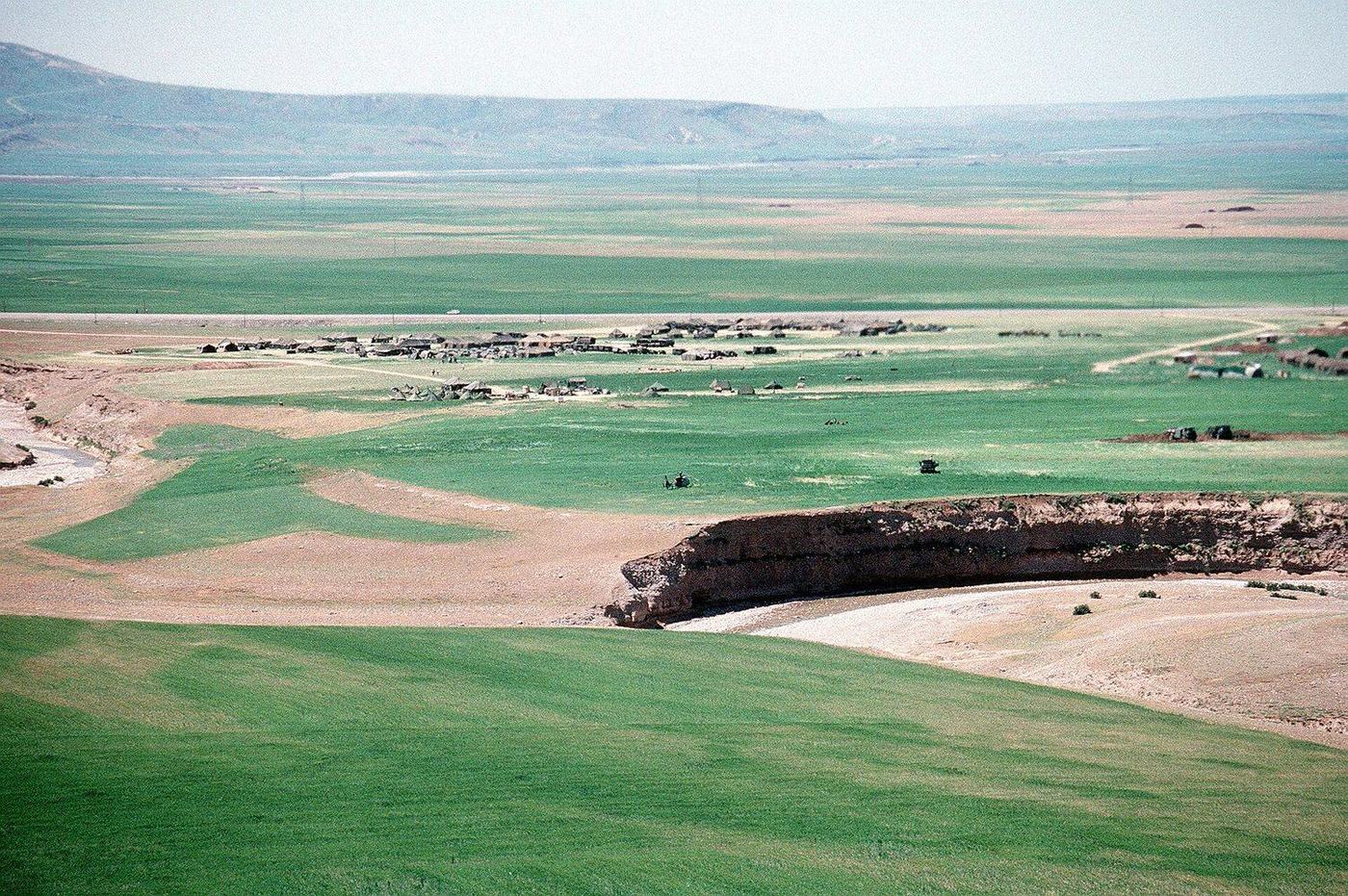

The foreign-led mode shows how much the outcome depends on the patron. Where foreign powers favour democracy or act to prevent genocide, as in Iraqi Kurdistan and Kosovo, these transitions can produce reasonably democratic regimes. Where they do not, as in foreign-sponsored insurgencies before 1989 or in the enclaves Russia has backed since the end of the Cold War, from South Ossetia to Crimea, they hold democracy back.
Part 4 · Opposition
Parties, movements and insurgents
The bottom half of the typology covers transitions led by people outside the state: opposition parties and politicians, independent candidates, civil society groups and insurgents. Their resources are usually thinner and their attachment to existing institutions weaker. Two of the modes work through elections, almost always the flawed elections run by the regime they defeat. The other two work through war, as insurgents build their own governments in the territory they hold.
Four ways out led by the opposition
Parties, movements and insurgents: one case for each mode, as classified in the chapter
Opposition-ledopposition · local power · no rupture
Maranhão, Brazil, 2014–15
- The Sarney machine ruled for almost 50 years
- Murder rate more than tripled, 2002–12
Cases from Table 3 (PDF p. 172); facts from the case descriptions, PDF pp. 173 to 183. Marked points are approximate locations. Map: Natural Earth 1:110m, today’s borders (South Sudan became independent in 2011).
A local opposition wins under the incumbent’s own rules. José Sarney’s machine had run Maranhão for almost 50 years when Flávio Dino won the governorship in 2014 for the small Communist Party of Brazil, without help from national party leaders.
The Workers’ Party, then governing Brazil, backed the Sarney family’s candidate.
The opposition wins with resources from outside the province. In Oaxaca, the Institutional Revolutionary Party (PRI) kept the state after losing the presidency in 2000.
After federal help fell short in 2004, the National Action Party and the Party of the Democratic Revolution united behind Gabino Cué in 2010, and the PRI lost the state.
Rebels take territory and govern it with resources they raise there. After Milton Obote’s return in Uganda’s widely criticised 1980 election, the National Resistance Army built civilian supply networks in the former Buganda kingdom.
From 1982, elected village councils ran its liberated zones. Needing civilians, the rebels governed rather than plundered, and took Kampala in 1986.
Rebels govern with substantial help from outside, but without foreign troops. Southern soldiers who mutinied in 1983 formed the Sudan People’s Liberation Army (SPLA), with Ethiopian money and rear bases.
By 1995, aid agencies spent over $100 million a year in the south, large parts of it going directly to the SPLA.
Each of these modes has a wider family. Opposition-led transitions also took place in Brazil’s Rio Grande do Norte in 2003 and Mexico’s Baja California Sur in 1989. Sverdlovsk Oblast, in Russia in the early 1990s, is the exception to the rule that oppositions win through the incumbent’s elections: the opposition leader Eduard Rossel used the region’s strong finances and his own popularity to force Boris Yeltsin to allow a direct election for governor.
In Maranhão, the regime’s undoing was local. Murder rates had more than tripled between 2002 and 2012, and in 2013, 60 inmates were killed in gang warfare in the Pedrinhas prison. The crisis turned attention on the governor, Sarney’s daughter Roseana, and delayed the grooming of a loyal successor. In 2016 the family remained powerful in the media, the state legislature and the bureaucracy.
Assisted oppositions are just as varied. In Brazil’s Northeast, the national Workers’ Party reshaped welfare and built its organisation, undercutting the clientelism of large landowners, and won Bahia in 2006. In Bihar, Nitish Kumar ended Lalu Prasad Yadav’s fifteen years of dominance in 2005 in partnership with the national opposition, the Bharatiya Janata Party. Assisted victories can be fragile. Cué governed Oaxaca for a single term, PRI loyalists kept many local networks, and in June 2016 Alejandro Murat, son of the PRI governor José Murat (1998 to 2004), won the state back for the PRI.
Technology was part of how outside power reached voters past the local bosses, and it was in part a topic of the fieldwork I did in Brazil and India. Bolsa Família, created by the Workers’ Party government in 2003, paid families through a bank card rather than through local politicians. Anderson Frey has since found that where its coverage was wider, mayors’ incumbency advantage shrank, electoral competition and the quality of candidates rose, support for clientelistic parties fell, and incumbents spent more on redistribution.
The vote itself changed as well. Brazil’s first trial of computerised voting took place in Brusque, in the southern state of Santa Catarina, in 1989, and the national electronic voting machine served about a third of voters in 1996 and all of them from 2000. Thomas Fujiwara later showed that in 1998, when only municipalities with more than 40,500 registered voters used it, the machine cut invalid and blank votes by more than a tenth of turnout, in effect enfranchising about a tenth of the electorate, most of them less educated, and that states then spent more on health. In India, studies published since have linked electronic voting machines to less fraud and booth capturing and to easier voting for women, illiterate voters and members of Scheduled Castes and Tribes (Debnath, Kapoor and Ravi), and biometric payment cards to faster and less corrupt welfare payments in Andhra Pradesh (Muralidharan, Niehaus and Sukhtankar 2016).
Technology does not bypass the middlemen by itself. When Jharkhand made Aadhaar fingerprint checks compulsory for subsidised grain, leakage did not fall at first, beneficiaries’ costs rose by about 17 percent, and about 300,000 people a month lost access (Muralidharan, Niehaus and Sukhtankar 2020). Who designs a reform, and who gains from it, decides whether it weakens a local regime or hands it new tools.
Sverdlovsk and Bihar are the two regions I follow in detail in the paired paper, Chapter 5: how each departed from its national regime, and how national actors helped bring each back towards it.
Insurgent transitions matter because many have produced states. Coggins found that 95 of 259 independence movements between 1931 and 2002 became independent states. The kind of outside help has changed. After the Cold War, Byman and colleagues found foreign states playing a large role in only 44 of 74 major insurgencies, while diasporas, by Byman’s later count, played a major role in 27 of 38 conflicts between 2008 and 2013.
In southern Sudan the patron shaped the goal itself. Ethiopia opposed secession, so until a change of regime in Ethiopia ended its support in 1991, the SPLA sought power in Khartoum rather than independence. South Sudan became independent in 2011, long after the period I classify.
Part 5 · The comparison
Where the national map still works
With the modes laid out, I return to the question. For each mode I judge how close it comes to each national mode: very similar, somewhat similar, or with some parallels. I then sort the modes into three groups, by how close those likenesses are and how many national modes they reach.
How much do the eight modes resemble national transitions?
My overall judgement, with the closest national parallels for each mode
Broad similarityVery similar to a national mode
Some similaritySimilar, with notable differences
Little similarityFew national parallels
local powernon-local power
Groups: Table 6 (PDF p. 185). Parallels to national modes: Table 5 (PDF p. 184), condensed. Gibson’s two paths: Gibson (2013), as matched to the typology in the paper’s footnote 12 (PDF p. 178).
Incumbent-led transitions resemble what Karl and Schmitter call imposition: incumbents decide to change the regime slowly and under control.
Opposition-led transitions resemble pacts and reforms, and above all what Staffan Lindberg calls democratisation by elections, in which oppositions accept unfair competition on the incumbent’s terms and win anyway.
Insurgent-led transitions are violent and produce new regimes, as revolutions do, but a competing national army and no recognised sovereignty make their governance very different.
Incumbent-led insurgent transitions resemble coups, but holding only part of the territory requires a clean split in the army and administration, which is almost impossible.
Four modes have little similarity, and all four run on power from outside the province. National governments bargaining with local autocrats for votes, and removing a regime by force without a rupture, have no national counterpart.
Foreign-led and assisted insurgent transitions face continuing war with the home state, without sovereignty, and depend on patrons.
The two modes the earlier literature studied, Gibson’s center-led and party-led paths, are both in this group. Party-led transitions always involve resources from national parties, so in this typology they are opposition-led assisted transitions.
The other six modes, including the two most like national transitions, had received very little attention.
Why an assisted opposition victory counts as little similarity
I find partial parallels for every mode (Table 5 of the chapter), so “little similarity” is an overall judgement. Opposition-led assisted transitions are somewhat like elections held with international support, and like foreign-imposed regime change. The difference lies in the tools. Presidents and prime ministers, party leaders, supreme courts and national election commissions can direct institutional resources to particular actors. They can lawfully change a governor’s electoral rules, and block the rents a local autocrat uses to buy off rising rivals. International actors have none of these tools.
I draw two conclusions, the first about the dimensions. Whether incumbents or the opposition lead does not separate the familiar modes from the unfamiliar ones, since both groups contain both. What sets subnational transitions apart from national ones is hierarchy and outside power, and to a lesser degree rupture, especially when it comes with outside support.
The second is about the field as a whole. The literature on subnational authoritarianism had found two highly distinctive paths and explained them convincingly, through the political support enclaves could offer national leaders. Studying only the most distinctive cases, though, leads a field to overestimate how distinctive its subject is, and to discard what has been learned elsewhere. If locally driven incumbent-led and opposition-led transitions are common, provinces are more like countries than the literature allowed. Knowing how common each mode is would take a systematic count of subnational transitions, which I did not attempt.
Part 6 · Why it matters
Political regimes are territorial regimes
I end with three implications, each wider than the provinces studied.
The first is about method. Political science had taken a subnational turn, using differences between regions and districts to test arguments about conflict, development, public goods, corruption and democracy. Such studies usually treat each unit as if it stood alone. The typology treats interference from above, and spillovers between units, as variables. Areas at war, on hostile borders, rich in natural resources or living on central subsidies are probably more exposed to non-local actors, and studies that leave those links out risk biased or imprecise results.
The second is about decentralisation. The era of the centralised, unitary state was fading fast when I wrote the paper: regional governments had gained power, and 61 member states of the United Nations explicitly recognised customary law and traditional governance. Many officially centralised states had never reached into their hinterlands, where landowners, strongmen and clans governed instead. More decentralisation and more state absence should mean more varied local politics, and perhaps more subnational transitions of every kind except those led from the centre.
The third is about national regimes. The literature had seen federal arrangements and decentralisation mainly as shelters for local authoritarianism. The typology adds a harder trade-off: devolved power can also be used for coercion and secession, and can produce new local autocracies. Many factors associated with regime change in countries, such as state weakness, ethnic fragmentation and natural resources, are spread unevenly across territory, and may act on national regimes partly through local ones.
In the dissertation, this chapter does a different job from its neighbours. The other chapters use regions and borders to pull culture and institutions apart. This one maps how those institutions change below the level of the state, and who changes them. A provincial regime can be ended from below, from the capital, or from abroad.
How is subnational regime change different? It operates under a national hierarchy and sometimes gets help from outside.