Regime change in miniature.
A province can move away from its country’s regime or back towards it, in a democracy or an autocracy. Across these four kinds of transition, I argue, the direction of the change decides who drives it.
This research is from my 2016 PhD dissertation, was never published, and has not been updated since. Later events and studies appear only where marked.
Some provinces are governed under different rules from the rest of their country. When I wrote this paper in 2016, the research on such enclaves had looked closely at one way they change: authoritarian provinces inside democracies becoming democratic, usually because national parties, courts or governments stepped in. I add the three other possibilities and follow two provinces through two transitions each.
In the Indian state of Bihar, democracy broke down under Lalu Prasad Yadav from 1990 and returned in 2005. In Sverdlovsk province in Russia, Eduard Rossel forced Boris Yeltsin to allow a competitive election for governor in 1995, and the competition lasted until Vladimir Putin’s centralisation absorbed it around 2004.
In both provinces, local coalitions built the enclave against the wishes of national actors, and in both, national actors ended it. The earlier finding that the centre drives provincial change holds for the endings, but for the beginnings it is reversed.
Written largely by Claude and reviewed by me. How this was made
Original textDissertation chapter 5, 2016 (PDF) ↗
In 1997, after India’s Central Bureau of Investigation charged him over the fodder scandal, a large corruption ring in the state government, the chief minister of Bihar was sent to jail. Lalu Prasad Yadav did not let go of the state. His wife, Rabri Devi, was installed as chief minister in his place, and for parts of the following years he governed Bihar from jail by mobile phone. In 1991 the state had more than 64 million people, the second-largest population of any Indian state or territory, and an income per head comparable to Eritrea’s. Lalu’s family and party held it for another eight years.
In the Ural Mountains, the conflict ran the other way. On 27 October 1993, three weeks after Boris Yeltsin sent tanks against the Russian parliament, the regional council of Sverdlovsk province approved a constitution for a Urals Republic. In April, 83 percent of the province’s voters had backed more autonomy in a referendum held alongside Yeltsin’s own. The head of the province, Eduard Rossel, a former construction director whom Yeltsin had appointed in 1991, announced a further referendum, an election for governor and a new council. Within two weeks, Yeltsin dissolved the council and dismissed Rossel.
Rossel came back by founding a party, winning a seat on the new regional council and becoming its chairman, and by May 1995 he had forced Yeltsin to let Sverdlovsk elect its governor, a contest he then won. For the next nine years the province had competitive elections, rival media empires and frequent protest, inside a country I classify as authoritarian.
Bihar and Sverdlovsk were enclaves: provinces governed under rules at odds with those of their country. Robert Dahl, in Polyarchy (1971), called his own neglect of regimes below the national level “a grave omission in a book about democratization.” The omission mattered because uneven democracy is common. Kelly McMann’s figures put the share of countries with “some or significant unevenness” in officials’ respect for civil liberties at between 50 and 60 percent in every period from 1900 to 2012, and the share with uneven quality of subnational elections at almost 60 percent, among democracies and autocracies alike.
How do enclaves like these come about, how do they end, and who drives the change: the province or the capital?
India, a democracy. Bihar, an authoritarian enclave from 1990 to 2005. Until 2000 the state also included today’s Jharkhand (hatched).
Russia, an authoritarian regime. Sverdlovsk province, a competitive enclave from 1995 to 2004.
Part 1 · The typology
Four ways a province can change regime
I keep the definitions simple. A province is governed democratically when offices with some decision making power are filled through reasonably free and fair elections, contested by more than one party, faction or independent candidate, and when its people have a reasonable measure of freedom of assembly, speech and association and some extension of the vote. Where provincial leaders are appointed, the national elections held in the territory must meet the same standard. If any of these features is missing, the province is under authoritarian rule.
A transition is a change in the rules for choosing leaders large enough to move a province across that line, while the national regime stays roughly as it was.
Two questions then sort every such transition. Does it take the province away from its country’s regime type, creating an enclave, or back to it, ending one? And does it happen in a democratic country or an authoritarian one? I call the first kind of transition regime-juxtaposing and the second regime-congruent; here they are simply transitions away from the national regime and back to it.
Four kinds of subnational regime transition
Where the transition leads, and what kind of country it happens in
Typology: Table 1 of the chapter (PDF p. 132). Cases and dates as classified in Table 2 (PDF p. 134). The coloured stripe on each cell shows the regime the transition produces: teal democratic, mulberry authoritarian. Years in the arrows are the enclave periods given in the abstract, Bihar 1990 to 2005 and Sverdlovsk 1995 to 2004.
Across the top: whether a transition moves a province away from its country’s regime or back to it. Down the side: whether the country is a democracy or an autocracy.
Each cell is a different kind of change, with different winners and losers.
A province of a democracy turns authoritarian, as the American South did after Reconstruction from 1877, or Áncash in Peru from 2007.
Some authoritarian enclaves, in Brazil and Mexico for instance, were never democratic: they are remnants of earlier national dictatorships. Breakdowns are enclaves made anew, and they had received little comparative attention.
An authoritarian enclave in a democracy becomes democratic. In the best-known case, the American South in the 1960s, the end of one-party rule enfranchised almost 10 million African Americans and brought competitive party politics to around 43 million Southerners.
This was the one cell the literature had studied systematically.
A province of an autocracy becomes democratic, as Baja California did in 1989, inside a Mexico still ruled by the Institutional Revolutionary Party.
Such enclaves had mostly been studied as steps towards national democracy. Often they were not: many returned to authoritarian rule.
A democratic enclave in an autocracy is brought into line. Brazil’s military government moved against opposition governors in Minas Gerais and Guanabara in 1966, two years after its coup. Russia’s abolition of elected governors in 2004 did the same to Saint Petersburg.
I follow Bihar through the top row and Sverdlovsk through the bottom one. Bihar’s democracy broke down from 1990 and returned in 2005. Sverdlovsk became competitive between 1993 and 1996 and lost it in 2004 and 2005.
Following one province through both its transitions holds much of the province constant, so the comparison can focus on what changed.
Placed in this grid, the earlier research covers one cell, the top right. Its main conclusion was that a province democratises when powerful national actors take up its cause: national parties, the national executive or the national courts. In the words of Edward Gibson, the field’s pioneer, provincial democratisation is “a result of the nationalization of subnational conflict.” I ask whether that holds in the other three cells.
Part 2 · The argument
Standardisers and contesters
Gibson’s account, the most influential, starts from the needs of national politicians. A local autocrat in a democracy can deliver votes in national elections and a bloc of legislators in the national parliament, and national parties tolerate him for those reasons, whatever the society around him is like. To keep the arrangement he practises what Gibson calls boundary control. He entrenches his rule inside the province, uses his influence in the capital to fend off national challenges, and monopolises the links between the province and the outside world, from flows of money to unions, courts and churches.
His opponents’ best strategy is the reverse. If they can nationalise the conflict by allying with outsiders who invest in the province, those outsiders may help them win under the existing rules, which Gibson calls a party-led transition, or intervene directly and rewrite the rules, a centre-led one.
My argument begins from an assumption: other things being equal, national actors prefer their country’s provinces to be governed alike. Uniform regimes make a political system more integrated and easier to manage, whether it is democratic or not. If that is right, the two directions of transition should differ. A transition back to the national regime serves the centre’s interest, so national actors should drive it.
A transition away from it works against the centre. Nobody in a national government, legislature or court has an obvious reason to create an authoritarian enclave in a democracy, or a democratic one in an autocracy, but local leaders do. A chief minister in a democracy can stay in office longer, and collect more of its spoils, by making elections less competitive. A governor in an autocracy may face a strong civil society or independent business groups, and find that sharing power through competitive elections suits him, or is forced on him.
So I make two predictions, and they do not depend on whether the country is a democracy.
What I expected
The importance of national actors in each kind of transition
I give three reasons why national actors who oppose the new enclaves fail to stop them.
- It is often hard to tell what kind of regime is emerging until it is too late to intervene, especially in a province of secondary importance.
- National actors have competing concerns and may not want to antagonise a provincial leader on poor information.
- The leaders who contest the national regime are often inventive, building new organisations, coalitions and institutions that can outmatch the centre for a time. Argentina’s ley de lemas, an electoral rule that reduced the risk of splits within the ruling elite in Santiago del Estero and other provinces, is one example; the Jim Crow laws of the American South are another.
Over time, I expected, such coalitions would lose their edge, and unless the centre depended on the enclave for support, it would find a way to bring it back.
Bihar and Sverdlovsk make a demanding test. Both are large provinces of large countries, with enough written about them in English and Russian to trace who did what. Both were extreme enclaves, which should make national actors keen to intervene, in the making as well as the ending. Socially and administratively they are opposites. Bihar was India’s poorest and least administratively capable state. Sverdlovsk, with 4.7 million people in 1989, the fourth-largest population of any Russian region, was industrial and urban, lived on mining, metals and steel, and was one of the country’s wealthier regions.
Part 3 · India
How Bihar’s democracy broke down
Lalu, as he is always known, became leader of the Janata Dal party in Bihar in 1988, after the sudden death of its previous leader. In 1990 the party swept the state election on a national surge for its founder, the prime minister V. P. Singh. In important ways the election was free. Many parties and candidates took part, including new ones; national and local media covered the campaign; rallies went ahead unhindered; and the Congress government lost.
But 125 people were killed in election violence, and booth capturing, in which armed men take over polling stations, and other irregularities forced reruns at more than 1,200 polling places. Lalu then won the post of chief minister, as leader of the largest party, through deft and brutal manoeuvring. It has been alleged that he paid some legislators for their support with money from the fodder scandal.
The breakdown that followed was gradual, and it came from inside an elected government. Lalu centralised power around himself and undermined the checks of the bureaucracy, the courts and, in part, the opposition. He brought into the state assembly a group of hardened criminals who had won their seats partly by intimidating voters and rival candidates. Later elections were fought on unfair terms, with violence, occasional fraud and the misuse of state resources. Several opposition candidates were killed in the 1991 national election. In 1995 Lalu and his partners won almost two thirds of the seats in the state assembly, over the Election Commission of India’s public objections to the polling.
What held the regime together was local. Lalu built a personality cult on charisma and populism, and an electoral base of his own Yadav caste, Muslims and Dalits, the groups at the bottom of the caste hierarchy once treated as untouchable, against the upper castes. The shift shows in who sat in the state assembly.
Who sat in Bihar’s legislative assembly
Share of elected members by caste background, percent
Upper castesOther Backward Classes (1995: Yadavs)Other Backward Classes, not YadavAll other members
Jeffrey Witsoe calls this coalition a “new hegemonic alliance”. Lalu kept it together with the threat of violence from his enforcers and the rewards of patronage and corruption, and its cohesion let him manipulate elections further, against national institutions and local rivals alike. I put it bluntly in the paper: “Bihar under Lalu was part authoritarian regime and part failed state.” His years in power were marked by populist and personalist non-governance, large-scale corruption by Lalu, his brothers-in-law and his inner circle, and, most visibly to the outside world, rising crime and lawlessness.
National actors did not cause this, except in the general sense of setting the stage. Congress did badly across India in 1989 and 1990, which gave the Janata Dal its chance, and Lalu’s rise to chief minister involved links to national figures in his party. Against that stand the national attempts to stop him. Congress and the Bharatiya Janata Party (BJP) both tried for years to unseat him. Leaders of his own party, the prime minister among them, opposed his rise. The Election Commission tried hard to clean up Bihar’s elections, and with other national actors tried to remove his government or change its practices in 1990, 1995, 1998 and 1999. Even jail did not end his hold.
Part 4 · Russia
How Sverdlovsk won its elections
Sverdlovsk’s path to competitive politics had two stages: first winning the right to elect its leaders at all, then building a politics in which those elections were contested.
Rossel owed his appointment in October 1991 partly to his ties with Yeltsin from Yeltsin’s years in Sverdlovsk, and partly to his strong support for Yeltsin during the attempted coup that August. The relationship soured over money. Rossel and other regional elites were unhappy with the federal arrangements, above all with how much revenue flowed from the province to Moscow. That led to the referendum, the Urals Republic and his dismissal.
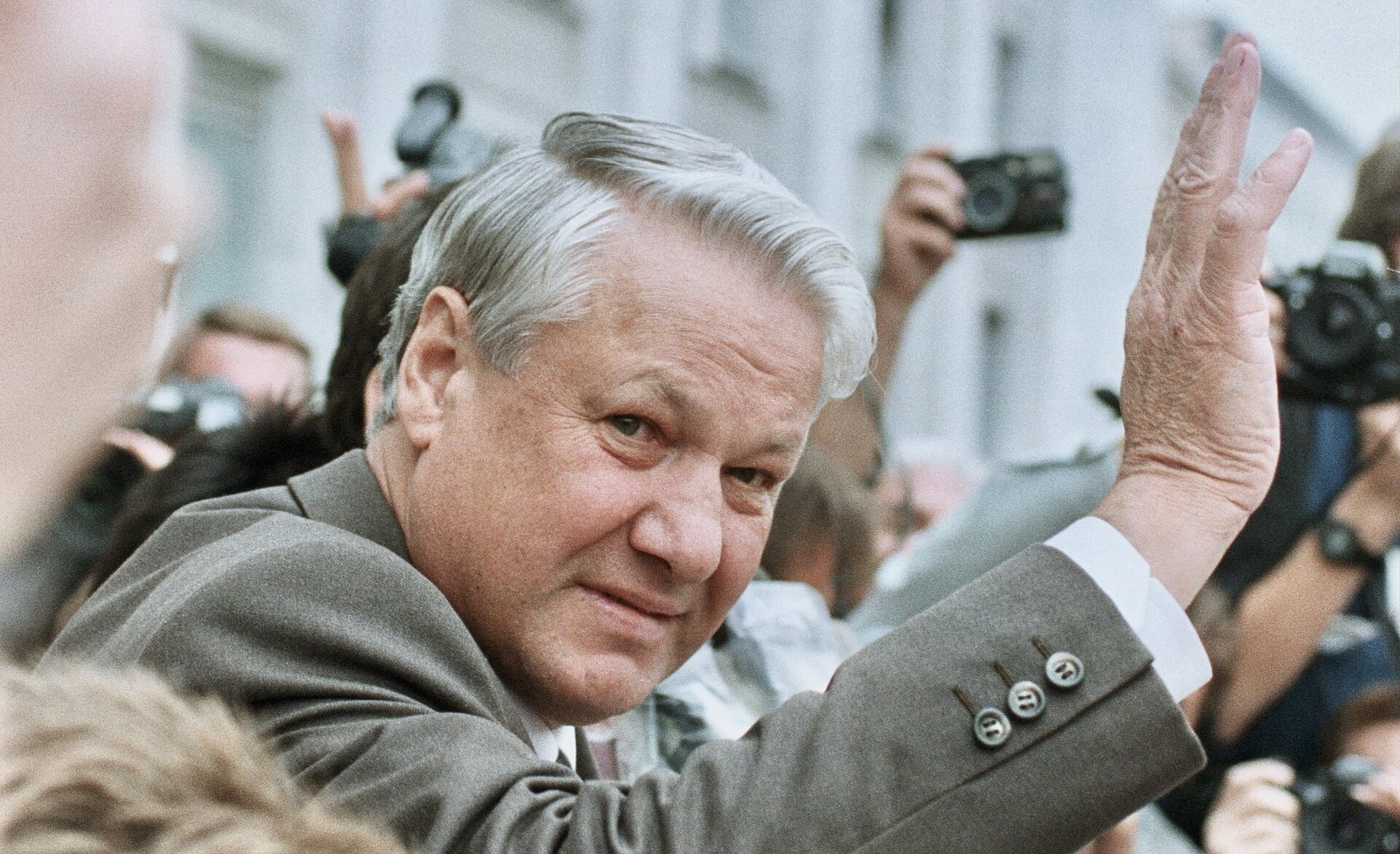

After it, Rossel founded a party, Transformation of the Urals, with a group of local notables. In December 1993 he was elected to the Federation Council, the upper house of the Russian parliament, and in April 1994 to the new regional council with five supporters from his party; with the votes of many independents he became its chairman. He and the council set about organising an election for governor at once.
In October 1994 Yeltsin banned elections for regional heads by decree, and the council appealed to the Constitutional Court. In May 1995 the two men met. Rossel promised to withdraw the appeal and to support Yeltsin in the coming presidential election, and Yeltsin granted Sverdlovsk the “exceptional right” to elect its governor that August.
Rossel’s leverage was raw political power rather than anything his office gave him: his popularity with voters, his standing with the elites who controlled the province’s mines and factories, and Sverdlovsk’s status as a “fiscal donor” region that paid more to Moscow than it received. Yeltsin, in an insecure position, faced a Constitutional Court case and the prospect of a humiliating defeat in his home region. The first stage of the transition was aimed, as I wrote in 2016, “quite literally against the federal center.” The election opened the second stage.
Governor of Sverdlovsk, first round, August 1995
Share of the vote, percent
Chapter 5, PDF p. 144, citing Gel’man and Golosov (1998). The chapter gives “almost 29” and “almost 22”; the share for all others is the remainder.
Yeltsin’s appointee, Aleksei Strakhov, ran with the national party machine behind him. His own deputy, Valerii Trushnikov, defected and ran too, supported by liberal politicians in Moscow.
The first round was close: Rossel almost 29 percent, Strakhov 25.6, Trushnikov almost 22.
With Trushnikov’s support, Rossel took almost 60 percent against Strakhov’s 32, although Strakhov’s link to the party of power let him spend almost five times as much.
The election was clearly free, and the incumbent lost.
Rossel then tried to install his lieutenant, Anton Bakov, as mayor of Yekaterinburg, the regional capital and the heart of its economy. The sitting mayor, Arkady Chernetsky, whom Rossel had appointed in 1992, took over Strakhov’s party and won with 70 percent to Bakov’s 16.
The same month, Rossel’s party won only 12 percent in the province in the election to the federal parliament.
The result was what I call multilevel political cohabitation: two strong actors, each with independent sources of power. Chernetsky’s party, renamed Our Home Our City, challenged Rossel’s in the regional election of April 1996, and the contest built party organisations for Rossel, Chernetsky and Trushnikov alike. Rossel and Chernetsky each founded a media group, which made the press plural, if within the bounds each patron would allow. The system stayed open to newcomers. In the 1999 election for governor a populist from a third party beat Chernetsky in the first round before losing heavily to Rossel in the second, and in 1997 most of the 300 mass protests in the Urals took place in Sverdlovsk.
It stayed competitive for reasons that were partly economic and partly strategic. Ownership in the province’s economy was relatively dispersed, so different industries and business owners could finance different parties; in the words of one study of the region, “the city elites maintained competition that forced both patrons to act according to their interests.”
Rossel’s strength against Moscow rested on his popularity, and having used the trappings of democracy to legitimise his rule, he had to tolerate competitors. And because national actors stood ready to ally with whichever local side was weaker, without being able to dictate to the province themselves, neither Rossel nor Chernetsky could crush the other. Nobody was able, or found it worthwhile, to rig elections heavily or to restrict speech and association.
Was the 1995 election fair as well as free?
The election was clearly free; its fairness is more debatable. The 2,337 domestic and international observers reported some vote buying, probably by several candidates. The incumbent’s organisational weakness blunted the usual advantage of controlling the local administration, which was in any case split between Trushnikov, Strakhov and, partly, Rossel. Freedom of assembly, speech and association appear to have been reasonably protected: state and private media covered the campaign vigorously, and many candidates organised movements unhindered.
Why I count Russia as authoritarian in the 1990s
On the regime classifications I cite (Cheibub and colleagues 2010; Geddes and colleagues 2014; Levitsky and Way 2010; Wahman and colleagues 2013), post-Soviet Russia under Yeltsin and Putin did not hold free and fair multiparty elections with reasonable guarantees of free assembly, speech and association. I treat it as authoritarian especially after the constitutional crisis of October 1993, when Yeltsin used force against the parliament, and as increasingly consolidated and closed after Putin’s election in 2000.
Its regions varied widely. Ethnic republics such as Tatarstan were run as personal fiefdoms; most provinces saw ordinary authoritarian rule; a handful containing Russia’s largest cities had competitive politics, independent media and political activism until Putin’s centralisation in the early 2000s.
Part 5 · The endings
Both enclaves were ended from the centre
In the state election of February 2005, Lalu’s regime finally suffered a serious setback. The opposition united and coordinated its campaign. The Election Commission took a hard line against his musclemen and against the loyalists installed to run the polls. And Lalu badly underestimated the Lok Janshakti Party, which drew the votes of Dalits, and failed to bring it into his coalition.
No side won a majority, and the central government placed Bihar under President’s Rule, governing it through the state’s governor. When the main opposition leader, Nitish Kumar, who had left Lalu’s party in 1994, began to assemble a majority, Lalu persuaded the governing coalition in Delhi, in which his party was the second-largest member and he himself was railways minister, to dissolve the assembly and call new elections. The Supreme Court later ruled the dissolution unconstitutional.
The manoeuvre backfired, because the backlash against Lalu’s open desperation cost him popularity, and the caretaker administration under President’s Rule shut him out of the state apparatus. The Election Commission could now run the October and November election over four rounds, with around 60,000 military and police personnel brought in from outside the state for six weeks to prevent violence, intimidation, booth capturing and fraud. That was more than a third of the number of security personnel involved in the 2003 invasion of Iraq, on top of Bihar’s own police. In February about 50,000 had been sent, but only by the third round, and the first two rounds had been more violent.
The machinery of voting had changed too. Since the general election of 2004, every constituency in India had voted on electronic voting machines, which record only a few votes a minute and leave no ballot papers to stuff, so a captured booth yields far fewer votes. Studies published since I wrote the paper find that the machines reduced electoral fraud and booth capturing across India and made it easier for women, illiterate voters and members of Scheduled Castes and Tribes to vote (Debnath, Kapoor and Ravi).
Nitish Kumar and his National Democratic Alliance won decisively. Kumar’s popularity rested largely on his leadership of that alliance, with the BJP’s approval, and on acclaim from his years as a national railways minister. The new government sharply curbed violence in elections, restored the independence of the bureaucracy, the courts and election administration, and pursued development.
Technology later cut into the business of the old intermediaries as well, and it was in part a topic of the fieldwork I did in India and Brazil. When Bihar in 2012 moved the funds of its rural employment scheme onto an electronic system that paid village councils directly, spending fell by 24 percent with no fall in employment, and the median official’s reported wealth fell by 14 percent, according to a later study (Banerjee and colleagues 2020). Such reforms are not automatic, though, and in her study of India’s states, Jennifer Bussell found that petty corruption, the bribes for licences and ration cards that politicians collect through officials they can transfer, predicted reform better than income or electoral competition. States with more of it adopted computerised public services later and offered fewer services through them, and some poorer states with less of it built the strongest systems. Grand corruption cut the other way: politicians who earn from large contracts, including with the private vendors that build such systems, may depend less on petty bribes and so can afford to reform. Technology can bypass the middlemen of a subnational regime, but only where those in power gain more from bypassing them than from keeping them.

Sverdlovsk’s enclave unravelled when the Kremlin grew strong enough to absorb the province’s own political machines. Putin, elected president in March 2000, drastically curtailed the regions’ powers. Governors lost their seats in the Federation Council, and with them a platform for coordinating against the centre. New presidential representatives gave regional elites a direct line to the Kremlin that bypassed both Rossel and Chernetsky.
The local rivalry pulled the province in. Chernetsky had allied with the centre against Rossel, heading the regional branch of the Fatherland party from 1999 and staying when it became part of Putin’s new party, United Russia, in 2001. Facing the expected end of elected governors, and to counter Chernetsky, Rossel dropped his own party and joined United Russia in 2003.
The mayoral election of December 2003 was the last important election in Sverdlovsk that United Russia did not decide: Chernetsky won the second round by 15 percentage points against a candidate backed by Rossel and United Russia. In 2004 Putin abolished elections for governors, and Rossel was reappointed. With both men in the same party, their contest across the media, elections, business and civil society came to an end.
From 2004 to 2006 United Russia took over the regional and city legislatures and dismantled the power sharing the two had built: elections were abolished or manipulated, local parties faded, the media were brought further into line and civil society lost influence. Putin tolerated both men for a while because they could deliver votes for him in national elections. Rossel was replaced by an appointed loyalist in 2009, Chernetsky in 2010.
The province’s pluralism was undone partly by its own logic. Because power in Sverdlovsk was dispersed, Rossel and his rivals could each seek allies among authoritarian-minded loyalists in Moscow to gain an edge over the other. Each was following narrow self-interest, and together they ended the province’s democratic independence. Put side by side, the histories of Bihar and Sverdlovsk are mirror images.
Two enclaves, mirror images
The regime in each province from 1988 to 2010, with transitions shaded over the years they took
Events from Figures 1 and 2 of the chapter (PDF p. 141) and the case studies (PDF pp. 142 to 151). Teal marks democratic rule and mulberry authoritarian rule, as the chapter classifies them; the shaded blends span the transition years in Table 2. The thin outer stripes show the national regime. Event positions are approximate within the year.
Bihar was democratic inside a democracy, then authoritarian for fifteen years, then democratic again. Sverdlovsk was authoritarian inside an autocracy, then competitive for nine years, then authoritarian again.
The blended stretches mark the transition years.
The breakdown came from inside an elected government, through violence, criminal candidates and control of the state machinery.
Jail in 1997 changed the chief minister’s name, not the regime.
The opening came from a governor in conflict with Moscow, who used a referendum, a republic, a party and a court case to win the right to an election.
Competition then took hold because power in the province was divided.
Both enclaves held through the late 1990s. In Bihar, Lalu’s party won a third term in 2000, under an Election Commission less forceful than in 1995.
In Russia, Putin’s election in 2000 began the centralisation that would absorb Sverdlovsk’s parties one by one.
In Bihar, the Election Commission, the Supreme Court and a national opposition party helped end the regime in 2005, against the wishes of the national government.
In Sverdlovsk, the Kremlin and its party absorbed the province’s rival machines and abolished the election for governor.
Part 6 · The verdict
Who was for the change, and who against
To test the two predictions, I sort the national actors in each transition into those who initiated or supported it and those who opposed it.
Which national actors were for the change, and which against
National actors in each of the four transitions, as I classify them
Tables 5 and 4 of the chapter (PDF pp. 148 and 152). Names in italics are in brackets in the paper: a faction of a party, or support that was partial or presumed. BJP: Bharatiya Janata Party, then India’s main national opposition party.
No national actor fully supported the breakdown. A faction of the Janata Dal backed Lalu’s bid to become chief minister.
The Election Commission, Congress and the BJP opposed him, as did other leaders of his own party.
Yeltsin, his prime ministers and the ruling party, Our Home is Russia, opposed the opening.
The only support was partial: liberal Moscow elites, and presumably the Constitutional Court, to which the council had appealed against Yeltsin’s decree.
The Election Commission, the Supreme Court and the BJP worked for the return to democracy. BJP leaders had helped broker their party’s alliance with Nitish Kumar’s Janata Dal (United).
The national government and its leading party, Congress, allied with Lalu, worked against it.
Putin’s Kremlin and United Russia led the return to authoritarian rule.
No significant national actor publicly opposed it.
Both enclaves were made against national actors and ended by them.
Both predictions hold, in a democracy and in an autocracy.
The finding that national actors drive provincial democratisation is right, but only for one direction of change. It extends to transitions back to the national regime in autocracies, and it is reversed for transitions away from the national regime, in democracies and autocracies alike. Those are led by local coalitions, against the centre.
The two countries differ in how the centre acted. In India, bringing a state back into line ran through institutions: the independent Election Commission, which regulates national and state elections and has been called “the fourth estate of power in India”; the Supreme Court; competition between national parties for votes; and a relatively free national press. In Russia it was discretionary, done by presidential decree and by steering federal money to the ruling party’s local allies. India’s national actors were also split over Bihar, a reflection of the pluralism of national politics. Russia’s were united against Sverdlovsk’s competitive party system.
The local side still mattered. Lalu’s answer to pressure from Delhi in the early 1990s was not to seek national influence but to rely on charisma, electoral strategy and alliances with local strongmen; from 1991 he controlled the 31 Janata Dal members of the national parliament from Bihar, but they were not pivotal. Rossel, by contrast, had to change national policy to get his election, and used his coalition and the province’s resources to do it. In both endings, local politics opened the door: Lalu lost Dalit votes to a party whose leader, Ram Vilas Paswan, sat with him in the national cabinet, and Rossel and Chernetsky each looked to Moscow for help against the other.
Part 7 · Why it matters
Uneven democracy is common
How far do two provinces travel? I check whether India and Russia are unusual with data from the Varieties of Democracy project, an expert survey with several coders for each country that rates how evenly free and fair elections and civil liberties are spread across a country’s territory. From roughly 1985 to 2010, Russia’s elections were markedly less even across its territory than the average country’s, and India’s were close to the average non-democracy and less even than the average democracy. In civil liberties, Russia was close to the average non-democracy and India less even than both averages.
The two countries are more uneven than most, but as I wrote in 2016, such variation “should not be considered a fringe phenomenon”: the gaps between their provinces and their national regimes are comparable to those in many other countries. Where such unevenness exists, I expect the centre to fight it and the provincial leaders it empowers to defend it.
The finding also changes where to look for the causes of enclaves. The literature had treated subnational authoritarianism and democracy as products of a special bargaining game between levels of government. If transitions away from the national regime are driven by local actors and local conditions, then the forces the study of democratisation has found at work in countries may work in provinces too: dependence on natural resources, social modernisation, protest and social movements, international influences, political culture and economic inequality. Provincial politics would then be less exceptional than the field assumed, the conclusion the paired paper reaches by another route.
I end the paper by comparing transitions in the same direction. The two transitions to democracy, Sverdlovsk in 1995 and Bihar in 2005, were both led by popular figures, Rossel and Nitish Kumar, after governments that had performed poorly. Their circumstances were otherwise very different: Sverdlovsk’s education, industry and economic complexity encouraged a democratising elite, and Bihar had none of those advantages.
The two transitions to authoritarian rule were each carried by the popularity of a national leader whose party’s local branch took power, V. P. Singh in 1990 and Putin in 2004. Bihar’s poverty, corruption and weak administration probably help explain why its democracy broke down and why its enclave lasted fifteen years. Sverdlovsk had a thriving economy and a capable bureaucracy and lost its democracy anyway. Those conditions barely changed over the period, so they cannot explain why each enclave began when it did, or why it ended. The timing came from the national regime, from coalition building inside the province, and from the relationship between the two.
For a dissertation about culture and institutions, that is the point of this chapter. The societies of Bihar and Sverdlovsk changed little between 1990 and 2005; their political regimes changed twice. Rules for choosing leaders can be rewritten within a few years, by local coalitions or by the centre, while the societies underneath stay much the same.
After the paper: what happened next
This section is a later addition, not a finding of the paper. Russia restored elections for governors in 2012, but with a “municipal filter” that requires candidates to collect signatures from a share of local councillors across the region. In April 2018 the Sverdlovsk regional parliament, on the governor’s proposal, abolished direct elections for the mayor of Yekaterinburg by 42 votes to 4. The mayor, Yevgeny Roizman, elected in 2013 and described by the news site Meduza as perhaps the only independent mayor in the country, resigned the next month.
In Bihar, Nitish Kumar led the state for most of the two decades after 2005, moving between alliances with the BJP and with Lalu’s party, and was sworn in for a tenth time in November 2025. In April 2026 he moved to the upper house of the national parliament, and Samrat Choudhary became the first chief minister of Bihar from the BJP.
The question has since reached older democracies. In the United States, where the states run elections, Jacob Grumbach built a State Democracy Index from 51 indicators of electoral democracy for 2000 to 2018. Of the factors he tested, all but one played a minimal role; Republican control of state government sharply reduced a state’s democratic performance. My 2017 essay on political culture in the Trump era takes up what such shifts can mean for a national democracy.
Who drives subnational regime change? Locals on the way out, the centre on the way back.