The return of political culture.
After the 2016 election that put Donald Trump in the White House, this essay asked political scientists to take political culture seriously again, and set out how to do so empirically.
Within weeks of the 2016 American election, scholars who had long treated mass political culture as a side issue were writing that citizens and their norms were democracy’s last line of defence. In this 2017 essay I argued that the turn was justified, but on evidence the field already had.
Political culture affects whether regimes survive through four channels: votes for illiberal parties, supporters who defend a government against a coup, protests after stolen elections, and the stories rulers tell to justify themselves. It shapes how dictators repress, buy support, perform and claim legitimacy. And it can be measured in what people write and what they do, not only in what they tell survey interviewers.
Written largely by Claude and reviewed by me. How this was made
Original publicationComparative Democratization 15(2), 2017 (PDF) ↗
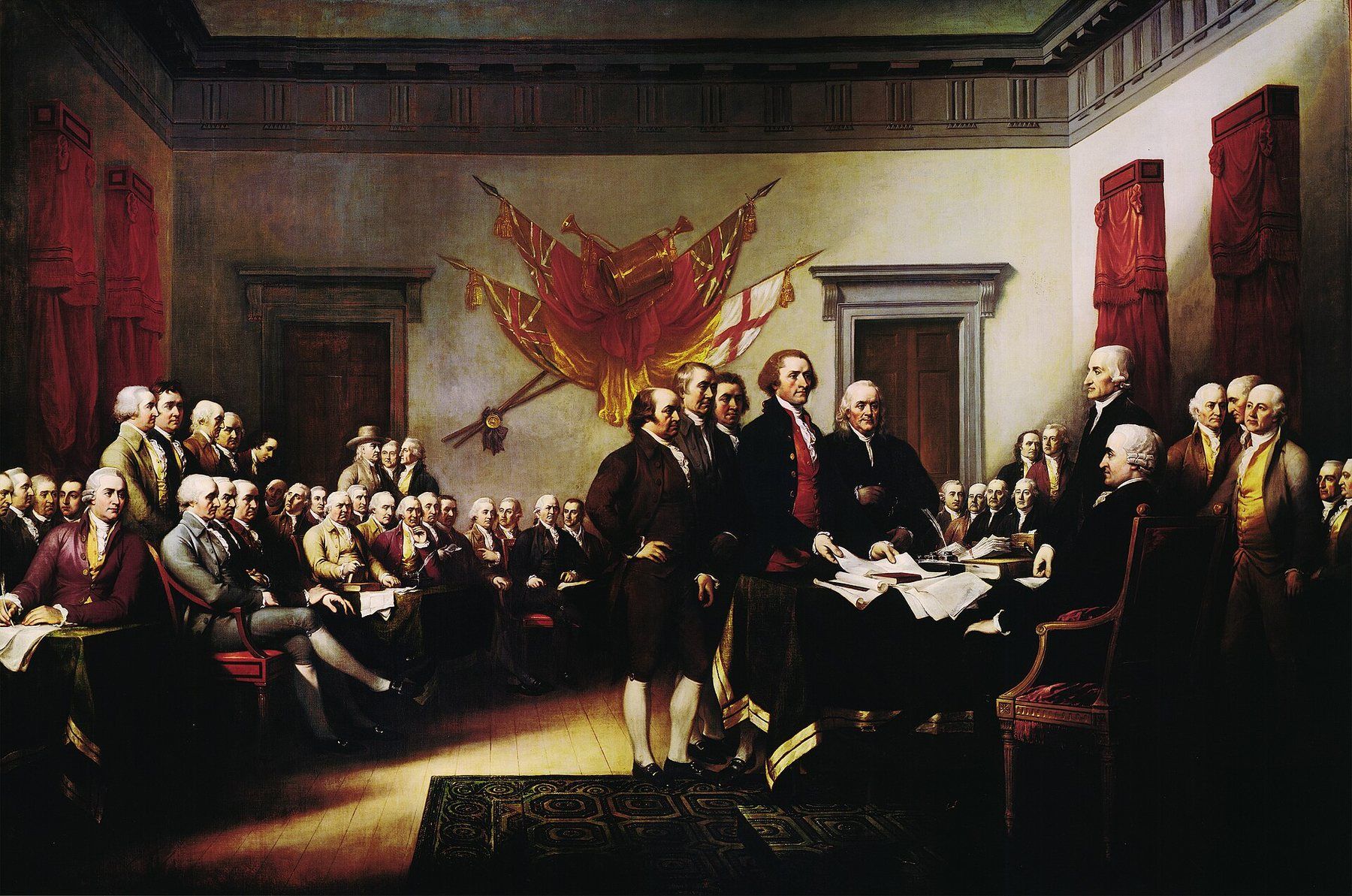

Political culturalists claim that societies cannot be ruled wholly without consent, and consequently that citizen preferences and political behavior shape regime type.
The essay’s opening sentence, June 2017
Two days before Donald Trump’s inauguration, the economist Daron Acemoglu published an essay in Foreign Policy under the title “We Are the Last Defense Against Trump.” American institutions, he argued, were less able to restrain a president than most people believed, and the defence would have to come from citizens and civil society. Coming from an economist best known for arguing that institutions, not culture, explain why some nations prosper, it was a striking turn.
Many political scientists said the same in the months after the election, writing in newspapers, on blogs and on Twitter that democratic norms among politicians and voters, and resistance from civil society, were what would keep American democracy intact.
I wrote this essay for a forum in the newsletter of the American Political Science Association’s Comparative Democratization section, which asked contributors for new ways to measure democracy. My answer was that measuring democracy in the age of Trump meant returning to political culture. That raised two questions: how much does political culture matter for whether regimes survive, and how can we measure it?
Part 1 · A sudden rediscovery
A rediscovery that cut against the field
The rediscovery sat awkwardly with the field. The most prominent accounts of democratisation, democratic breakdown and authoritarian survival, by Barbara Geddes, Adam Przeworski and colleagues, Carles Boix, Daron Acemoglu and James Robinson, Jennifer Gandhi, Milan Svolik and Naunihal Singh, give little reason to think that falling public support for democracy threatens its survival. Most treat political culture as a product of regimes and their incentives, if they treat it as relevant at all. Beatriz Magaloni, and Steven Levitsky and Lucan Way, were partial exceptions.
One data point should not change political scientists’ minds.
The essay, p. 22
If the evidence before 2016 said that political cultures hostile to democracy could not change institutions, the election of one president should not change that view. The real question was whether the evidence had ever said so.
By political culture I meant “deep-seated values and practices with relevance for the demands which citizens formulate in the political sphere, and which condition the nature and intensity of their political behavior.” On that definition, votes for authoritarian candidates and protests against stolen elections are political culture too, not only answers to a survey.
So even if fatigue and disillusion with liberal democracy were rising in Western countries and elsewhere, did we need to worry? I answered yes, and pointed to four channels that the comparative literature already documented.
Where political culture enters regime change
Four channels in the essay, by the kind of regime they work in
Drawn from the essay’s text (p. 22). Each bar spans the regime types the essay names for that channel; the examples are the essay’s own. A diagram of an argument, not of data.
In new and established democracies, illiberal parties and candidates can erode democracy, or end it, if enough voters back them. My examples were Peru after 1990 and, most spectacularly, Germany in 1933.
Popular governments, democratic or authoritarian, can call on their supporters when soldiers move against them. Mass support works as protection against a coup, as it did when one failed in Turkey in July 2016.
In competitive authoritarian regimes, protests after a stolen election can become the focal point for regime change, if discontent is wide and the opposition can coordinate, as in Serbia in 2000.
Every non-democracy takes popular challengers and dissidents seriously.
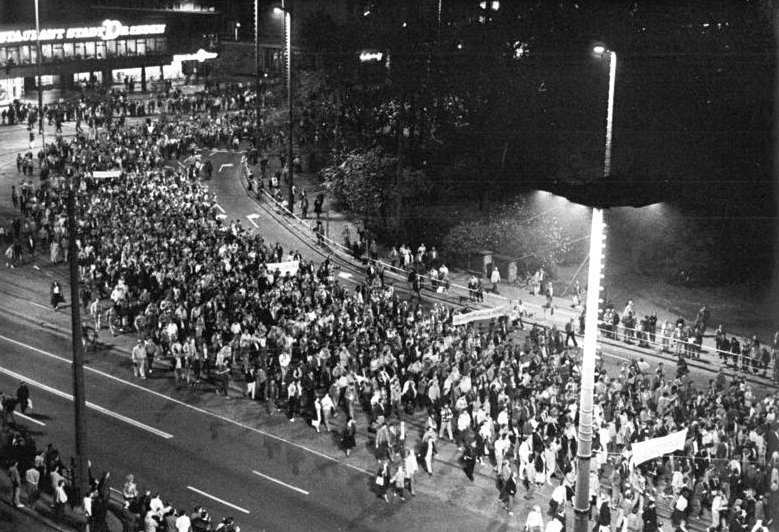
Even closed one-party regimes can be undone by committed democrats when the regime’s own narratives and propaganda stop convincing people, as across much of Eastern Europe after 1989.
None of these channels needs culture to be fixed or ancient. They need only that what citizens want, and how hard they act on it, can tip the outcome when a regime is under strain.

Part 2 · Inside dictatorships
Even dictators work with the culture they rule
The same holds inside authoritarian regimes. Scholars of dictatorship usually study four survival strategies: repressing opponents, coopting them, governing well enough to satisfy people, and persuading them that the regime has a right to rule. Mass support and political culture condition each of them.
Four ways authoritarian regimes stay in power
and where mass support and political culture enter each, in the essay’s examples
- 1RepressionPartly about culture
Soldiers may refuse to fire on people who share their nation, faith, ethnicity or family.
The British Empire recruited minorities: Sikhs in India, Tamils in Sri Lanka, the Karen in Burma.
Coercion seen as illegitimate can backfire: Ukraine 2013, Iran 1978, Sharpeville 1960.
- 2CooptationPartly about culture
- 3PerformancePartly about culture
- 4LegitimationEntirely about culture
From the essay, pp. 22 to 23. In its words, legitimation is “entirely and not only partially about culture and popular support”; the other three are partly about it. Legitimation bases condensed from its two lists.
Soldiers and police sometimes refuse to fire on people who share their nation, religion, ethnicity or family, so regimes have often relied on troops from minorities, other regions or abroad. Coercion that people see as illegitimate can backfire. Yet law and order aimed at outgroups can be popular, in democracies and dictatorships alike.
Buying off elites and citizens works less well on people with strong ideological commitments or a strong sense of separate identity. As one study put it, “good democrats make bad targets” for vote buying. Citizens, for their part, often demand clientelist politics themselves.
Delivering growth or order helps every regime, but publics weigh results differently. Where people care about how decisions are made, and not only about what they deliver, performance buys less support.
Legitimation is the one strategy that is entirely about culture. Regimes try to control what citizens learn about their performance, and to move the norms citizens judge them by onto ground where the regime has the advantage.
If we think these strategies matter in and of themselves, then political culture should as well.
The essay, p. 23
Part 3 · How to measure it
Read what people write, and watch what they do
If political culture matters, the next problem is measuring it in ways that allow comparison across people, places and years. I divided the measures into two kinds. Textual measures capture what people say and write, their sentiments and preferences. Behavioural measures capture what they do. The division runs across quantitative and qualitative research and across observational and experimental designs. Laboratory experiments compare individuals measured close together in time; observational studies and long-running field experiments need measures that hold up between units and over years.
- Cross-national surveys: the World Values Survey, the Afrobarometer, the European Social Survey
- Supervised text analysis, which scores texts against a reference text, as in Richard Nielsen’s work on the jihadi radicalisation of imams
- Unsupervised text analysis: Lisa Blaydes, Alison McQueen and Justin Grimmer trace when themes rose and fell in the “mirrors for princes” advice literature of the Christian and Islamic worlds
- Social media posts, such as Arabic Twitter discourse
- Experiments that reveal preferences: dictator, ultimatum and trust games
- Names, culturally significant buildings such as churches, and internet searches
- Nico Voigtländer and Joachim Voth: medieval pogroms and anti-Semitic Judensau sculptures for the past; synagogue attacks and letters to Der Stürmer for the Nazi era
- Speeches, and interviews with elites and ordinary people
- Frederick Schaffer on what democracy means to voters in Senegal
- Personality cults, propaganda, architecture, branding and symbols, and how elites and masses read them
- Lisa Wedeen on Syria under Hafiz al-Assad
Next, I expected: behavioural measures from automated digital data, such as searches, online purchases and open government data, often with precise geocodes.
For decades the default was the survey. Ronald Inglehart and the World Values Survey pioneered cross-national comparison, and regional surveys such as the Afrobarometer and the European Social Survey followed. Tellingly, Michael Coppedge’s 2012 book Democratization and Research Methods has a 35-page chapter on “Political culture and survey research” that mentions other approaches only in passing.
Large-scale analysis of texts has since become feasible: parliamentary speeches, media reports, books and social media posts, which I called “primary bearers and expressions of political culture.” Behavioural measures have spread too, helped by economists’ long preference for revealed over stated preferences. The most striking example I gave was Nico Voigtländer and Joachim Voth’s study of German cities, which traces anti-Semitism from medieval pogroms to violence in the Nazi era. I expected the future to belong to behavioural measures drawn from automated digital data, such as searches, purchases and open government data, often with precise locations.
My dissertation uses both kinds. On the Danish–German border, turnout from 1871 and gymnastics club membership in 1865 measure civic habits long before anyone ran a survey. In African regions and among immigrants in Europe, the evidence comes from survey interviews.
Part 4 · Afterword, October 2026
What came next
After a long hegemony of democratic ideas, the coming years will likely provide us with lots of data to test how resilient new and consolidated democracies really are to major shifts in political culture.
The essay’s last sentence, June 2017
This afterword was written in October 2026 and is not part of the essay.
Three and a half years after the essay appeared, Trump lost the 2020 presidential election to Joe Biden and refused to accept the result. On 6 January 2021, while Congress met to count the electoral votes and certify Biden’s victory, a crowd of his supporters stormed the Capitol. A week later the House of Representatives impeached him for incitement of insurrection, by 232 votes to 197. After he had left office, the Senate voted 57 to 43 to convict, short of the two-thirds majority required, and he was acquitted. He won the presidency again in 2024 and began a second term on 20 January 2025.
In February 2017, in a piece for the Danish science site videnskab.dk, I had listed his threat not to accept a lost election among the campaign remarks that worried scholars of democracy, and described the scenario of a president who loses an election and refuses to step down, as a risk rather than a forecast.
What the essay adds is a reminder of where to look. Much of what decided those weeks was behaviour rather than opinion: officials who certified results, legislators who counted the votes, and the people who tried to stop the count. That is political culture in the essay’s sense, and it can be measured.
Did political scientists go too far in disavowing political culture? Given what we’ve learned in the past ten years, yes, probably.